
WORK WITH RAINSHADOW PERMACULTURE
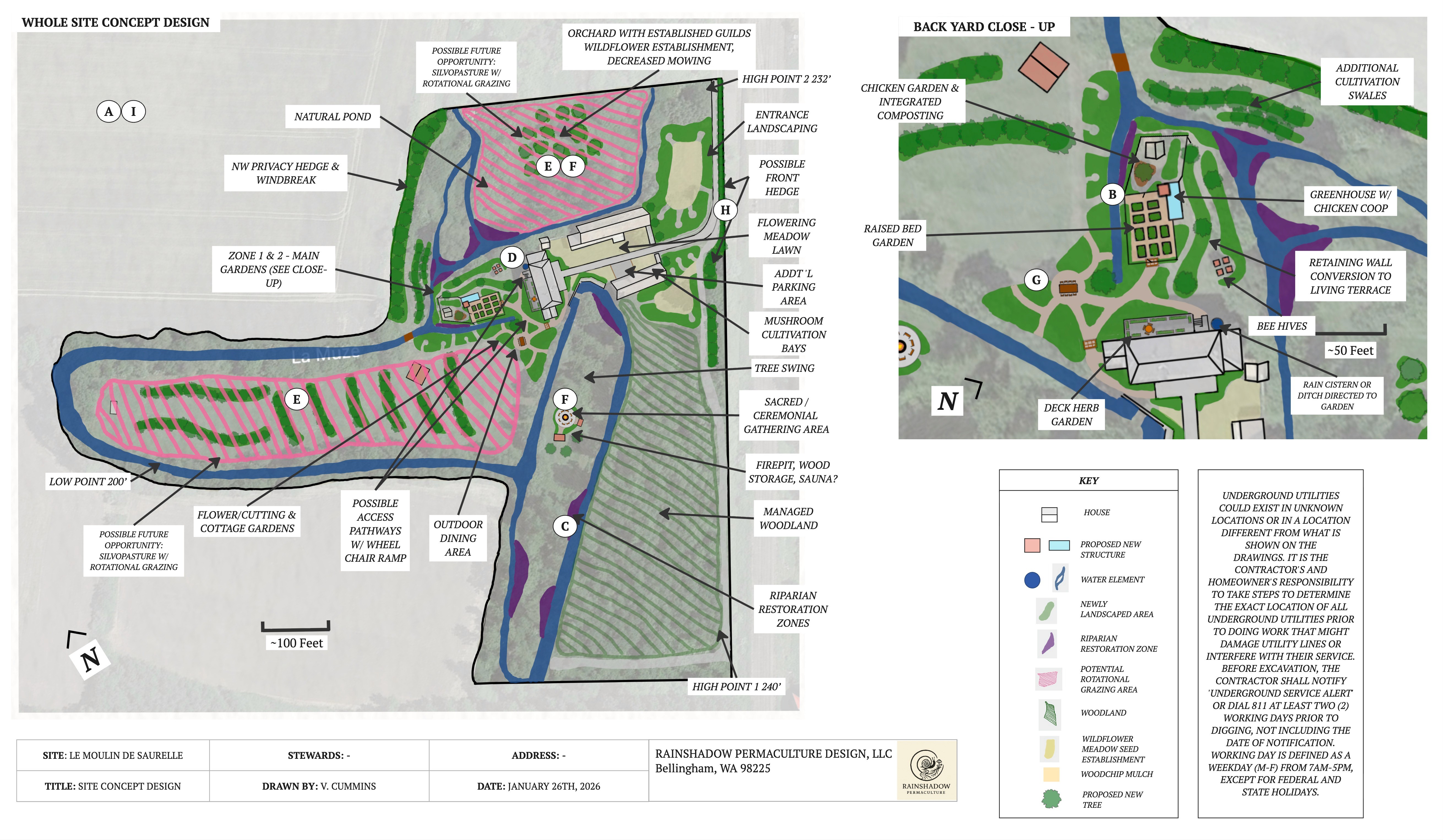
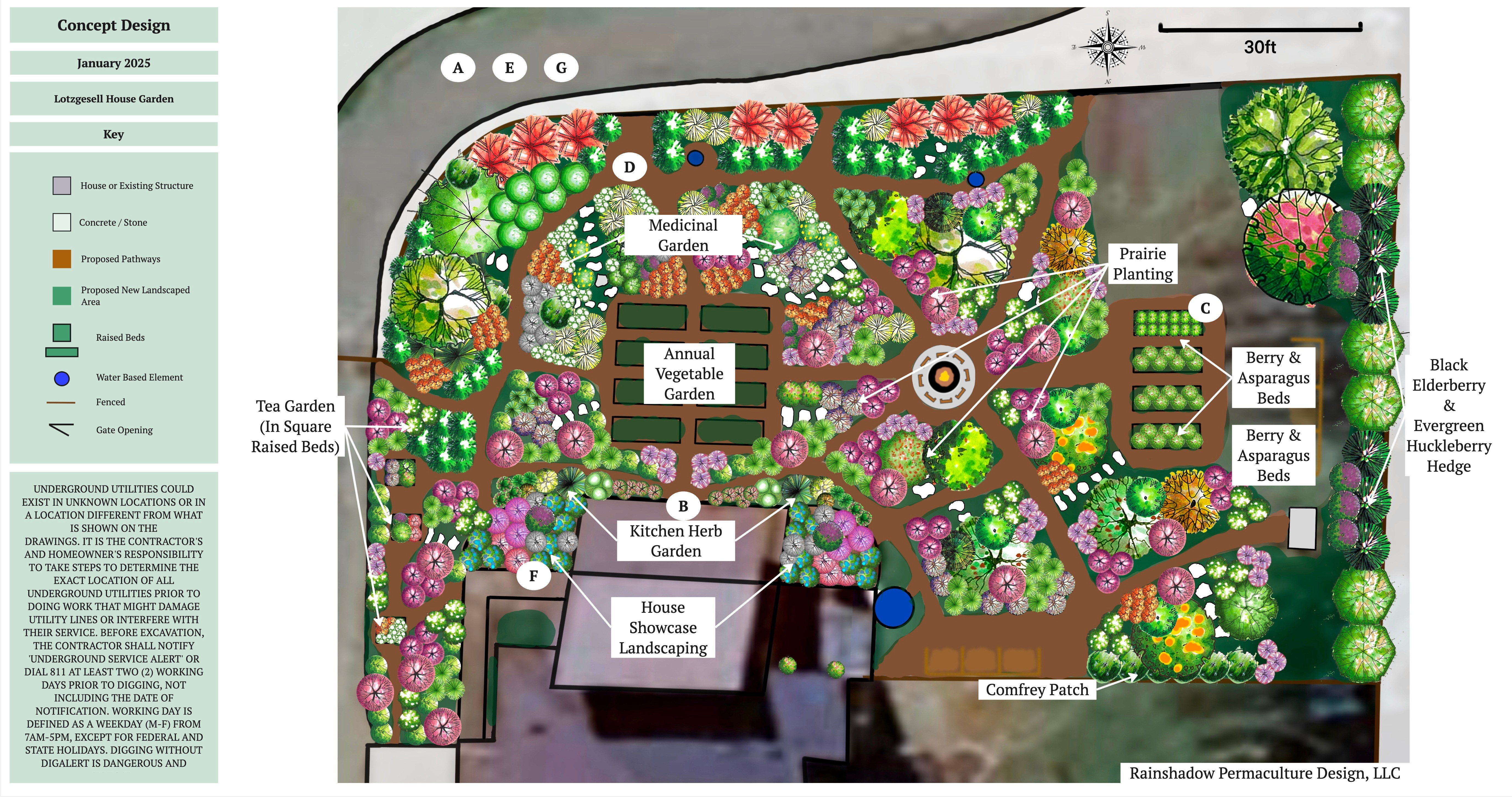
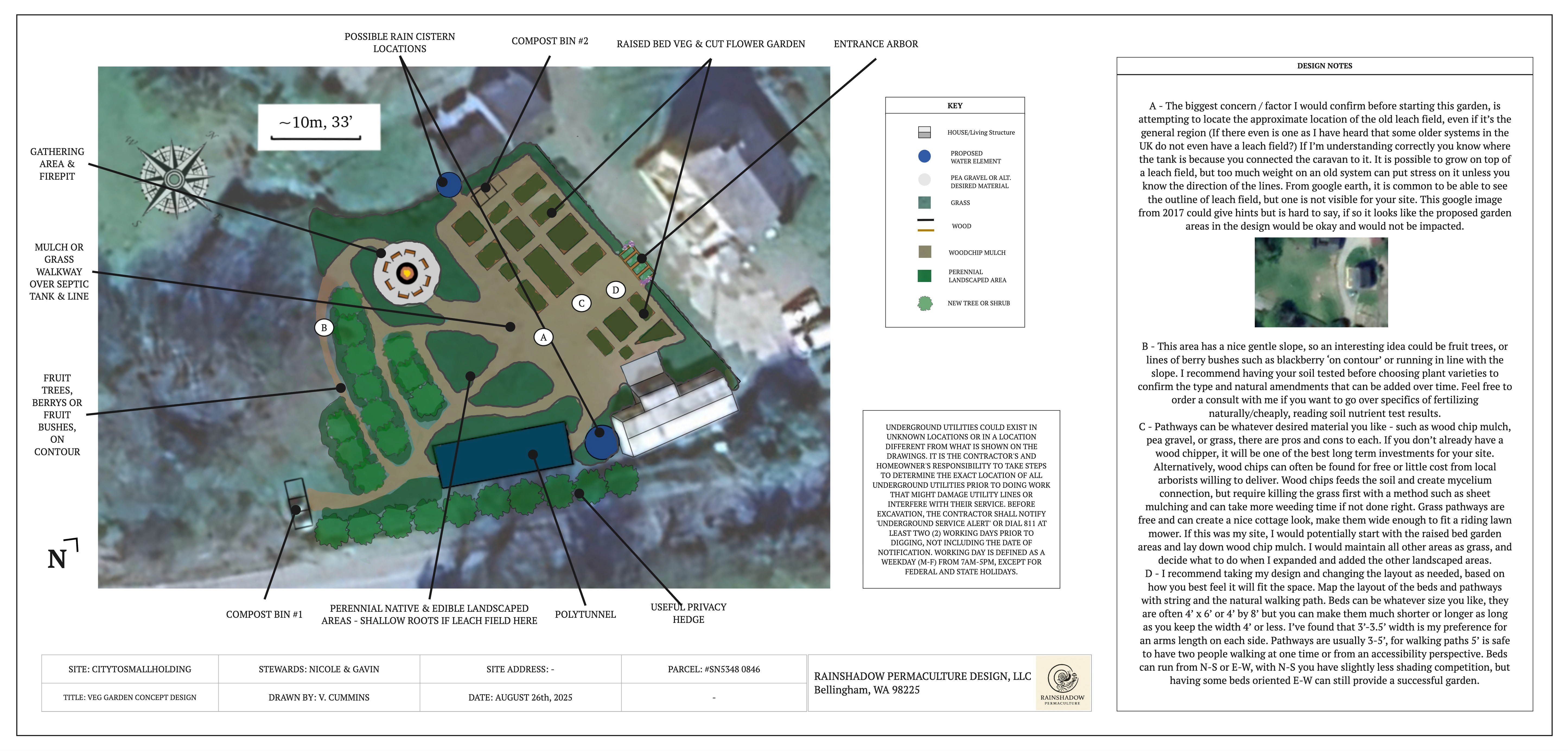
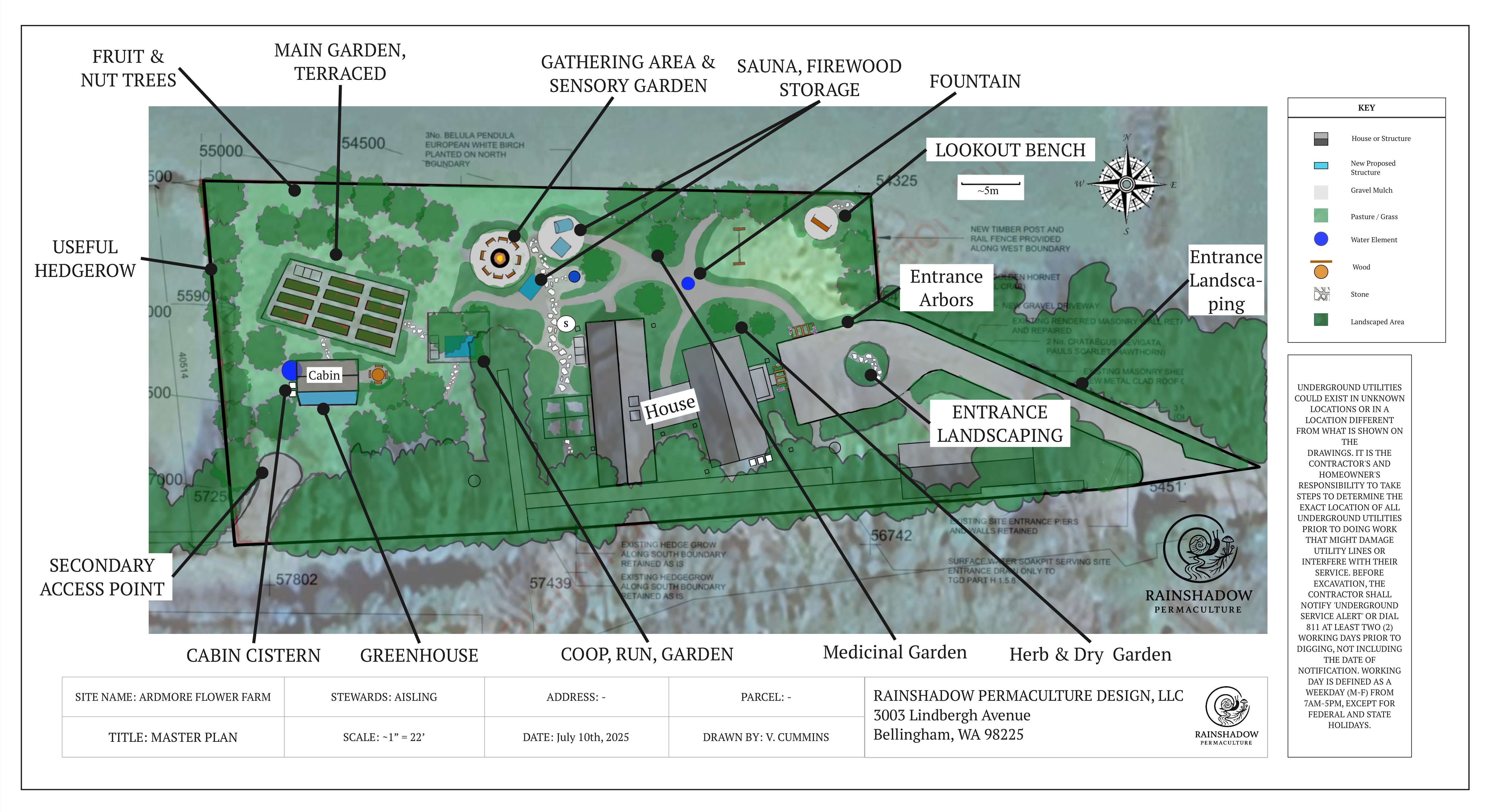
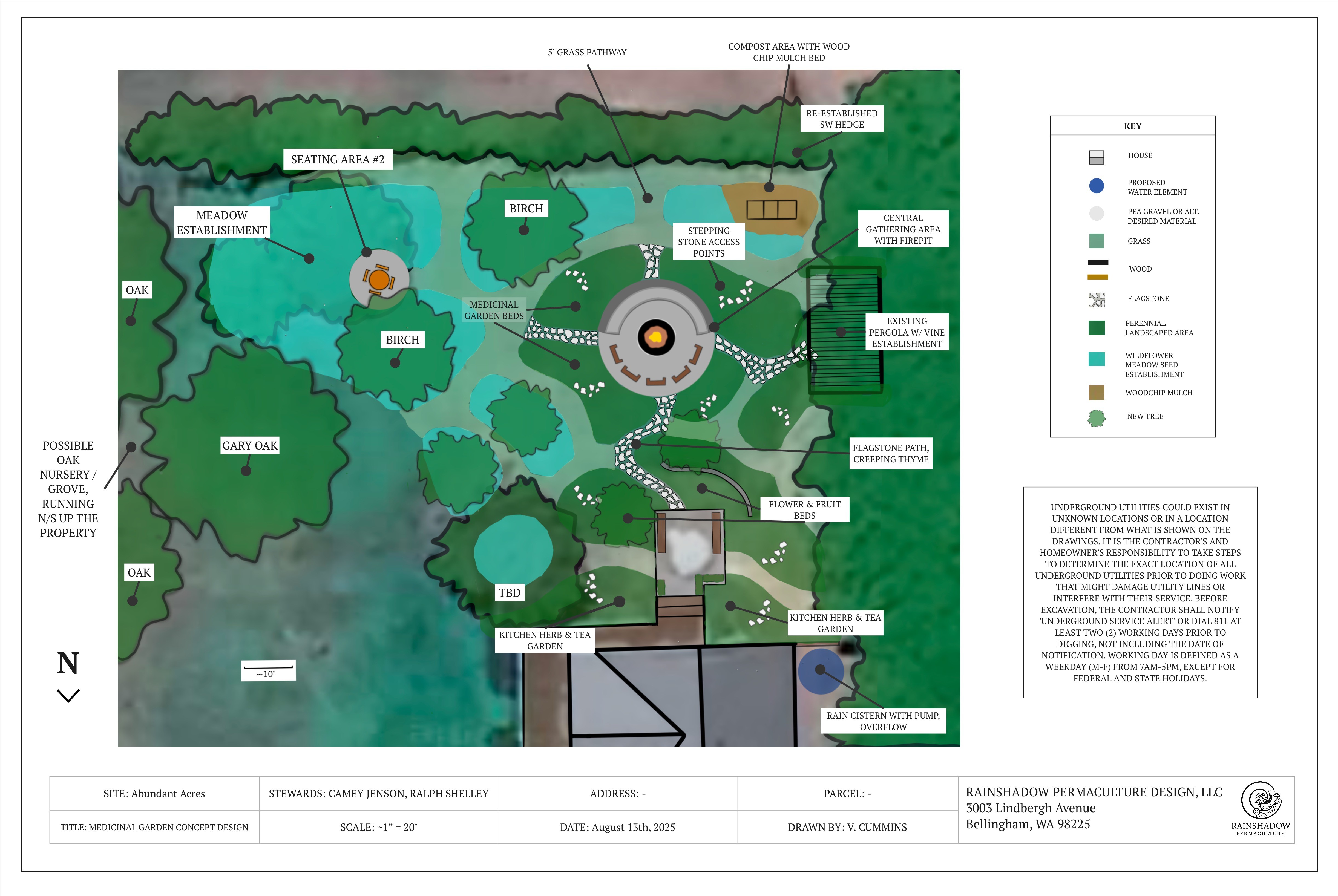
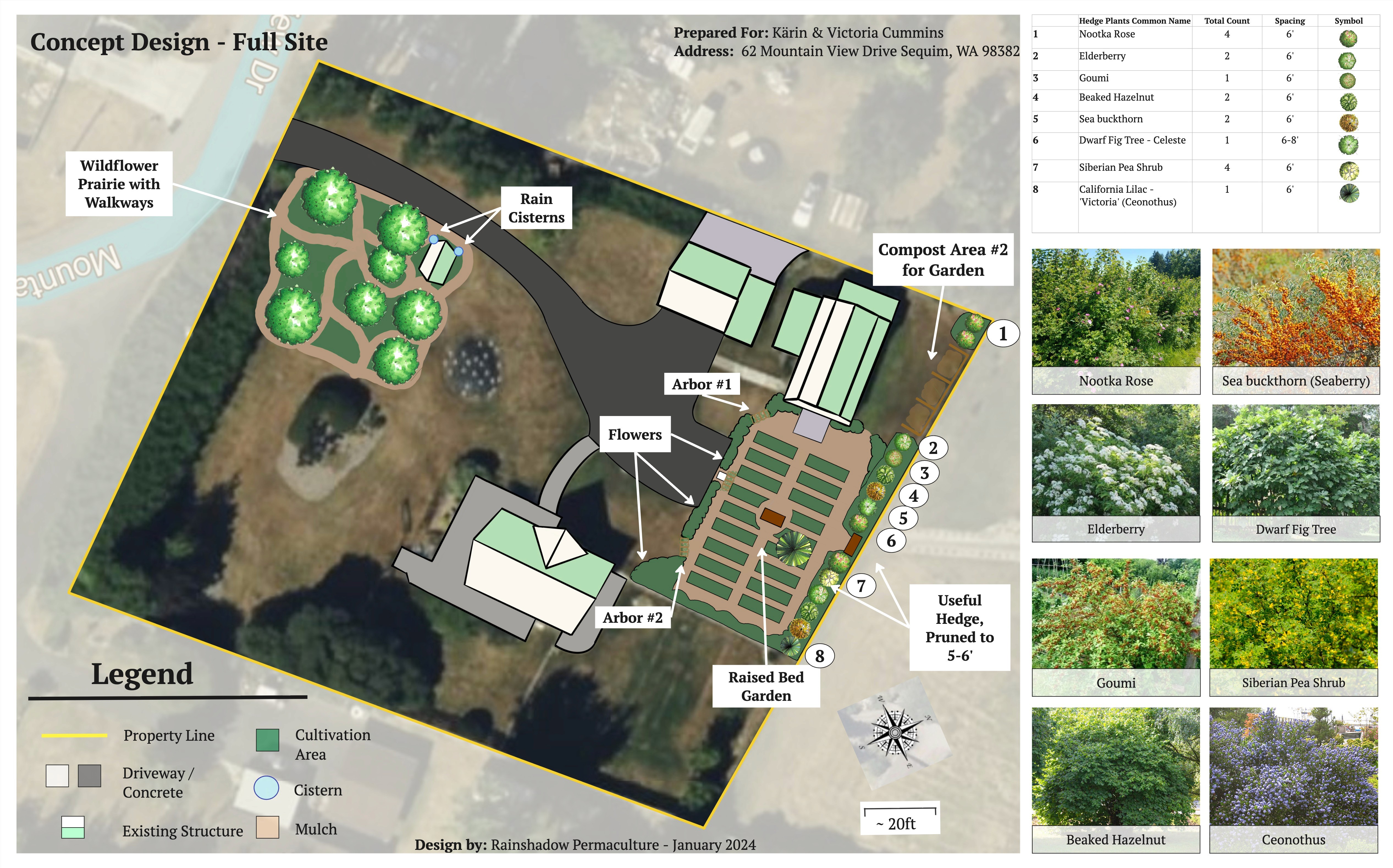
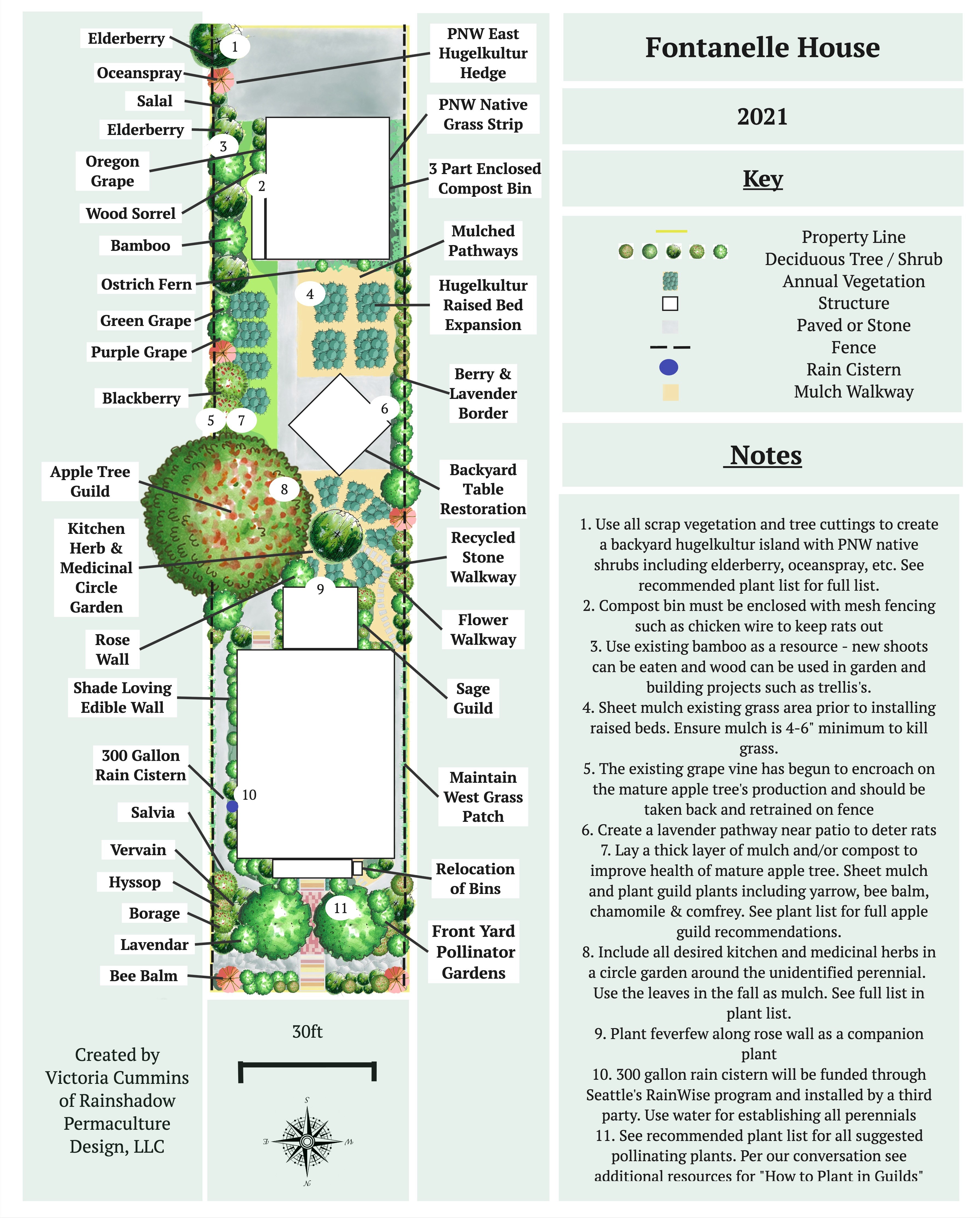
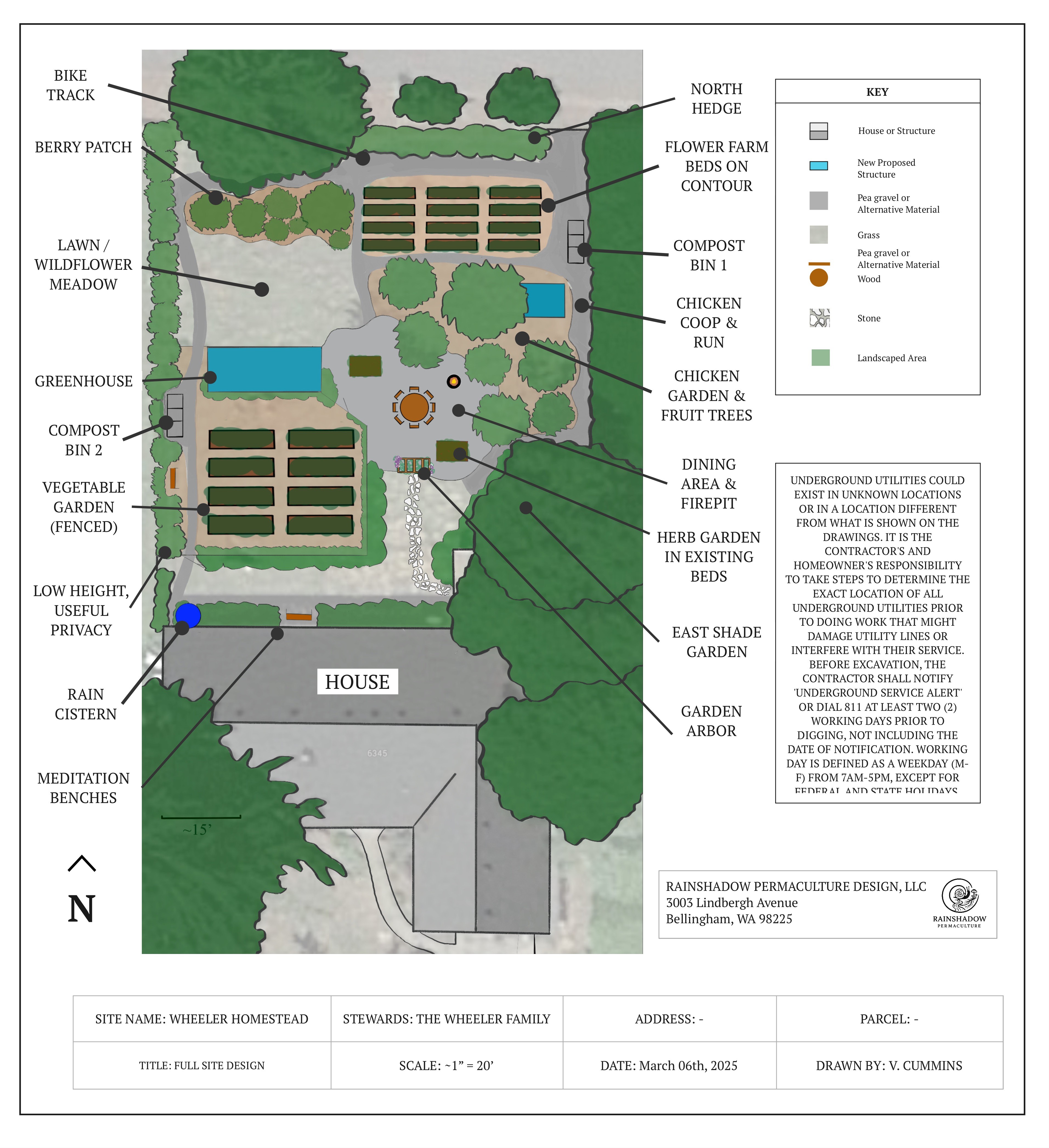
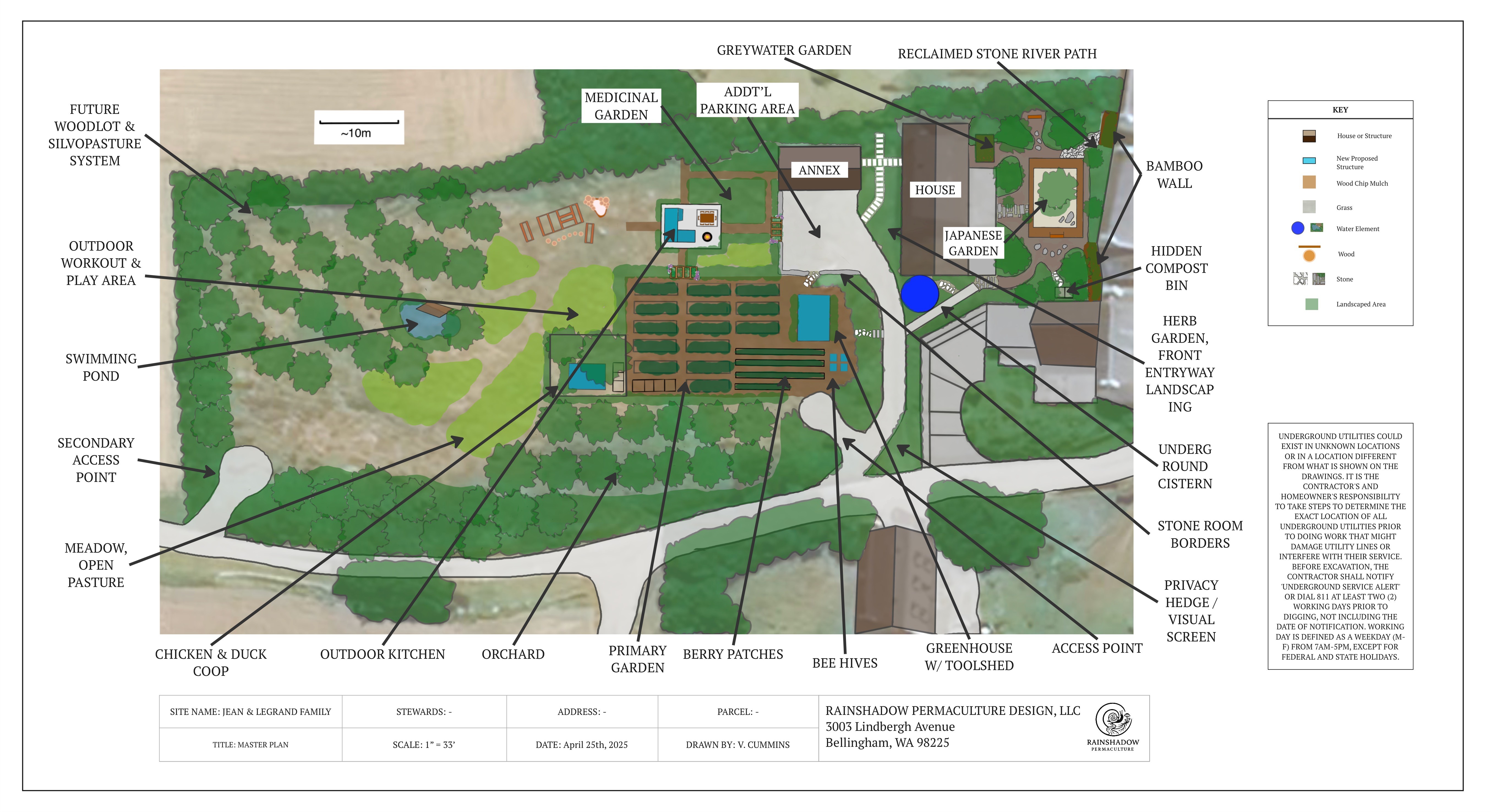
OUR DESIGN PORTFOLIO

WORK WITH US
OUR APPROACH
Originally started by Victoria in 2021, Rainshadow Permaculture is based in Bellingham, Washington and specializes in regenerative landscape design and installation using permaculture principles.
Our focus is to turn barren landscapes and lawns into edible, medicinal, and native gardens. We believe that access to fresh, organic food and clean water is a basic human right. We believe that all living things are connected, and we strive to create landscapes that demonstrate this relationship. Our goal is to create spaces that nourish both people and land.
Here’s a look into how we approach a project, what we notice, what we prioritize, and how we begin to work with you to get things growing. Our process moves through four phases:
Site Observation & Analysis
Vision Creation & Design
Implementation
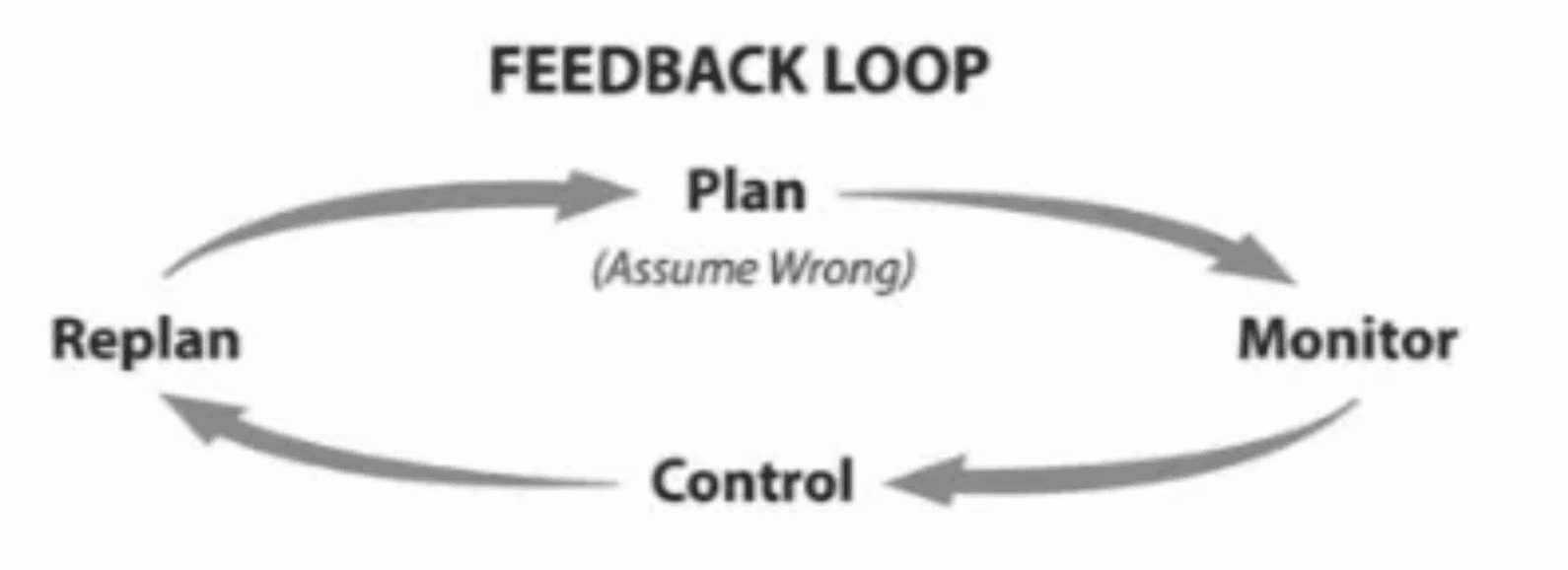
Maintain & Replan with ongoing feedback
FAQ
WHAT IS PERMACULTURE?
Permaculture is a powerful design framework focused on forming a harmonious relationship between people, plants, animals, and soil. It aims to create stable and productive systems that meet human needs while regenerating the earth.
WHATS THE DIFFERENCE BETWEEN PERMACULTURE DESIGN & CONVENTIONAL LANDSCAPE DESIGN?
Permaculture is a holistic design approach that mimics nature to design human systems. Permaculture prioritizes harmony with nature, biodiversity, and regeneration, while conventional design often focuses on aesthetics. Permaculture looks to use resources available on site and locally, when conventional designs tend to be high in resources such as ongoing maintenance, fertilizers, etc. There are quite a few differences between a landscape that has been designed with permaculture principles in mind versus conventional landscaping. For example, traditional landscaping berms typically stick up and off of the ground by 6-12”. When it rains, water runs directly off of these berms and towards the street and nearest waterway. With permaculture, a site analysis will first determine the best ways to slow, spread, and sink water onto the site. For this example, an “infiltration basin” or trench might be installed in lieu of a berm in order to capture all available rain during a storm event. Compost, wood chips, and locally found organic matter might be added to the basin. Next native, edible, and medicinal plants could be planted in the inside of the basin, in “guilds.”
IS PERMACULTURE LOW-MAINTENANCE?
In our opinions, low maintenance is a myth. As we all know, life can be challenging, and most everything good in life takes work. However, with that in mind, many modern systems created by humans are incredibly and increasingly complex. Permaculture aims to put a lot of the heavy lifting on the project at the beginning - through the correct water systems, soil building, and by choosing plants and elements that look to capture energy and use it in multiple ways. A successful design will always take work, and will always have problems, but should start to take care of itself, and with time, need less and less inputs.