
The Rainshadow Permaculture Blog
Why Soil Is So Important In Permaculture, and How To Build It
A healthy teaspoon of soil can contain more living organisms than there are people on Earth - an estimated 7 to 10 billion microorganisms in just one teaspoon. This includes bacteria, fungi, protozoa, nematodes, and more, all working together in a vast underground web of life. That statistic alone shows the true depth and beauty of what it means to be alive. Even the smallest amount of soil contains billions of organisms. It seems like we’re all just a tiny fractal of a much bigger collection of energy and life.
Why Soil is So Important
Soil is more than dirt. It’s alive. It breathes, it holds water, it feeds plants, and it literally sustains life aboveground. When it’s rich, it holds moisture like a sponge and gives roots access to what they need. When it’s compacted or depleted, water runs off, roots struggle, and microbial life disappears. So our goal in regenerative gardening and farming is simple: build soil quality so that life can thrive, water can slow, sink, and spread, and roots can reach deep into a living matrix of nutrients and activity.
Tilling vs. No-Dig
The practice of tilling goes way back. It was introduced as a method to break up soil and “prepare” it for planting. But when you till the ground, you're breaking up more than soil—you’re breaking fungal networks, disturbing worm populations, and exposing microbial life to sun and wind. Every time we till, we release stored carbon and disrupt the relationships that hold healthy soil together.
I sometimes wonder - half joking, half serious - if tilling is what turned the Middle East into a desert over a period of hundreds, if not thousands of years. Generations of exposed soil, depleted water cycles, and overgrazed land. It all comes back to our relationship with soil, water, and land at large.
No-dig or no-till methods, on the other hand, preserve soil structure and life. They let nature do the heavy lifting, and they build fertility year after year.
How to Build Soil
So how do we do it? Here are a few simple ways I’ve seen the most success with:
Add organic matter: Every bit helps. Think leaves, kitchen scraps, old straw, grass clippings, coffee grounds, seaweed, etc. Organic matter feeds microbes and keeps the soil soft and fertile.
Hugelkultur: This is the practice of layering logs, branches, and woody debris beneath your garden beds. As it breaks down, it retains moisture and builds long-term fertility.
Lasagna gardening: Layering materials like compost, cardboard, straw, and soil directly on top of grass or bare ground. It's a great way to start a new bed without digging.
Manure through rotational grazing: Letting animals cycle through a space and deposit their waste naturally can be one of the fastest ways to increase soil fertility - especially when followed by rest.
Aerate gently: Instead of turning the soil, poke holes with a broadfork or digging stick to allow oxygen and water to enter without breaking up the structure.
My Soil Story
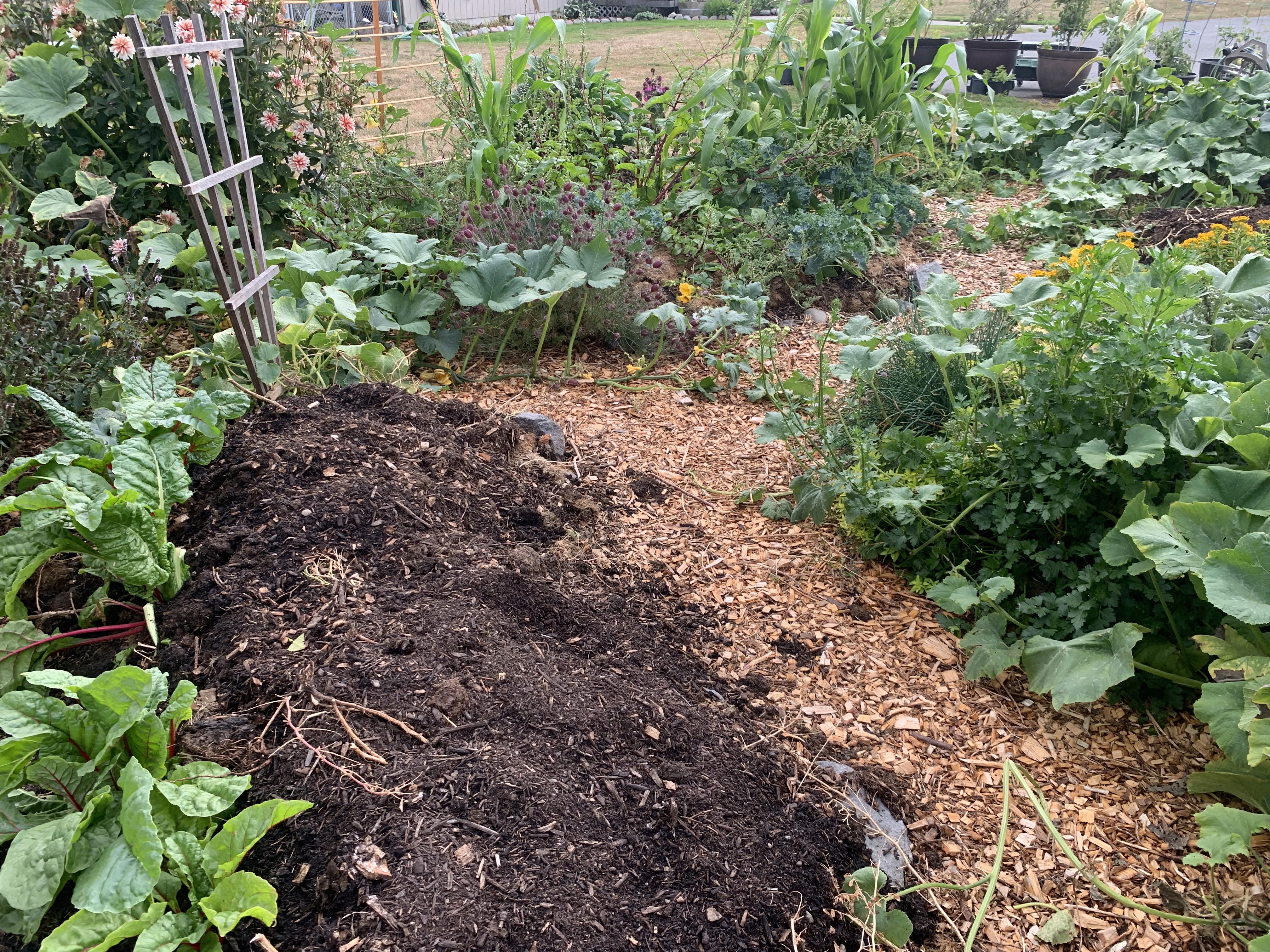
When I first transitioned from traditional tilling to no-dig, my soil was rich but compact. It was loamy, had potential—but needed breath. That first year, I added everything I could find on-site: dead leaves, fireplace ash, half-finished home compost, compost from a local company, old mushroom substrate, grass clippings, small twigs, and branches. I grew a lot of leafy greens and corn, and everything did fine.
By the second year, it got better. I kept layering in organic matter, compost and compost tea, comfrey leaves and comfrey tea, and started chopping up fall garden scraps into 4–6" pieces to lay on the surface. I always made sure the beds were covered. By the end of the third year, the results were incredible. Rich, black soil, and one handful could hold 10 earthworms or more. This is the kind of soil we’re aiming to build wherever we can on our site, especially in cultivation areas. This kind of soil is not only living, it’s thriving. Almost anything can grow, and the rate of succession increases.
Eventually, we moved away from that garden. I had to do my best to put it to rest. But the soil? The soil was still alive. Even after I removed all the beds and cleared the space, it became the most stunning wildflower meadow the next year. No watering. No fertilizing. Nothing. Just life doing what life does.
This is the dream for years 4, 5, and beyond: for the land to begin regeneration at a rate much faster than if we left it alone. Beds so rich with life that perennials don’t need us anymore, and annuals reseed themselves. Food forests, pasture, market rows, and flower gardens - all of it should aim for this kind of soil.
But CAUTION! Because once your beds are this fertile, succession moves in fast. You may be planting lettuce and end up with a hazelnut grove if you’re not paying attention ;)