The Rainshadow Permaculture Blog
Why the Permaculture Movement Needs Holistic Management
The permaculture movement has gained A LOT of momentum over the last 10 years, in the United States and across the world. And for good reason! It seems like many people are aware of state of our world and the challenges we face. People want to learn how to grow their own food, live in community, reduce waste, and life aligned with their higher purpose.
Even though permaculture was originally designed to be a holistic model of design meant for everyone, many have challenged the permaculture movement, saying that it can be near sighted for large scale change and sometimes filled with elitists and egos aligned with the current model of capitalism. Permaculture is absolutely necessary when looking at the earth from an ecological lens, but what about our towns, cities, governments, and issues such as wars, famines, community conflict, and energy alternatives, to name just a few? If we were going to solve these large scale issues, where would even begin?
We’re in a time unlike any ever before, with large global communities and empires, governments, institutions, and systems that seem to fail the people and life within these systems unlike ever before. And unfortunately, this may continue to happen until global human civilization collapses and the earths resources are so depleted, it can longer sustain (human) life.
Although dark and quite morbid, does that mean that we should just give up and keep destroying the earth and each other? I argue no, for the same reason that the sun rises without fail, that rivers carve its way through stone, that a flock of robins gather at dawn. It’s the same force that compels a parent to endlessly love their child, that keeps us reaching out in kindness even when all seems lost. Beneath every system, every struggle, every moment of despair, there is an undeniable undercurrent: LOVE! And if we’re actually going to lead with love and a love for this earth, we need to change our systems and our frameworks. What if I told you that someone devoted their entire life to solving this exact problem.
What’s Holistic Management?
Working as a conservationist in Africa in 1969, Allan Savory made one of the worst decisions of his life - he ordered the culling of thousands of elephants in an attempt to stop desertification. To his and his team’s horror, the land didn’t recover but instead got much worse. The ecosystems continued to degrade, proving that the conventional wisdom of the time - reducing animal impact to prevent overgrazing - was deeply flawed. This devastating realization led Savory to devote the rest of his life to understanding the root causes of land degradation and creating a system that could be applied holistically to any person, business, government, or ecology. He wanted to create a system where we can actually balance human needs while regenerating the earth, instead of destroying it.
He developed the Holistic Context, a decision-making framework designed to balance human needs with ecological regeneration. It asks us to consider not just short-term outcomes but the long-term effects of our choices on the land, the community, and future generations. It aims to work within our current economic system, balancing money as just one of many resources necessary for the well being of the planet and life within it. Since its inception, Holistic Management has gained traction worldwide, with thousands of farmers, organizations, and even government bodies using its principles to regenerate soil, reverse desertification, and create truly regenerative systems.
How does Holistic Management work?
At its core Holistic Management is about making decisions that align with a clear vision of the future. It considers social, environmental, and economic factors all at once, versus just the single driver of financial growth. The Holistic Context supports the idea that nature operates in complex, interconnected systems, and that our actions (whether in farming, business, or governance) must reflect this reality if we want to survive as a species. Instead of applying rigid, one-size-fits-all rules and solutions, it encourages adaptive management based on ongoing observation, feedback, and real-world outcomes (assume you are ALWAYS wrong).
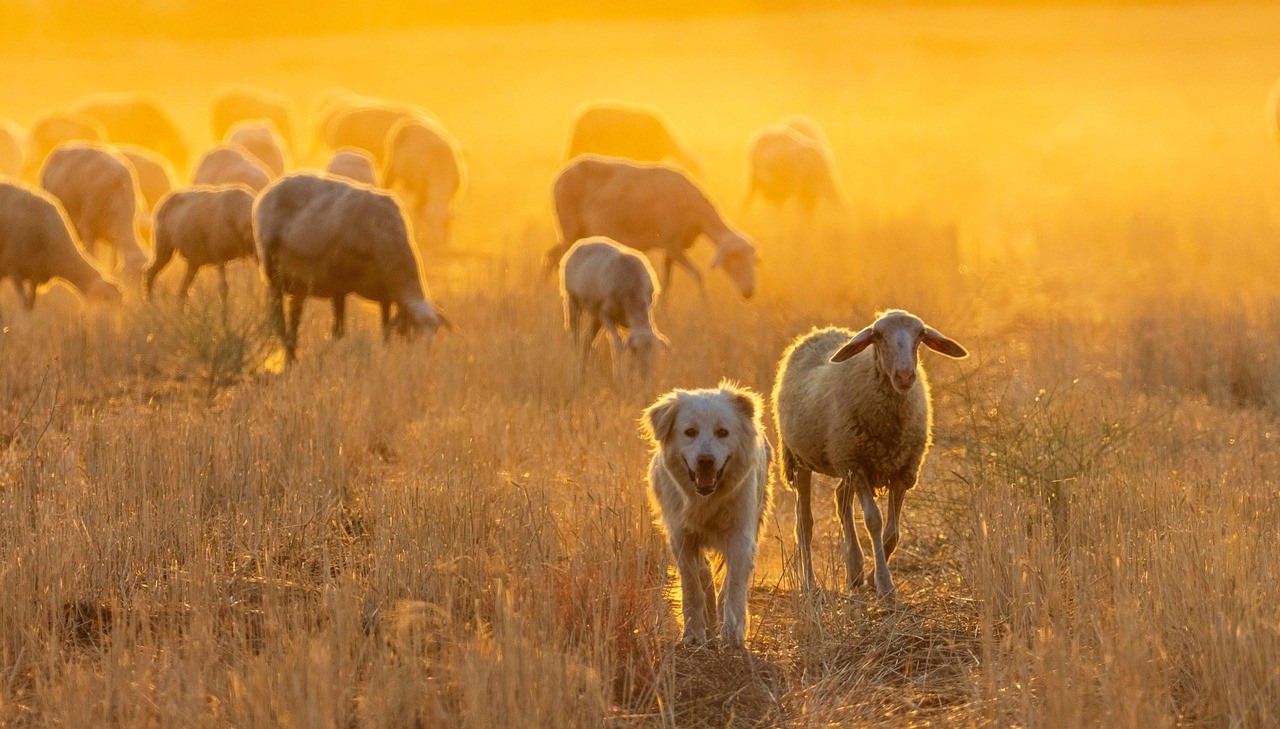
One of the most powerful aspects of Holistic Management is its approach to land stewardship. Savory’s work demonstrated that properly managed livestock could mimic natural grazing patterns, which in turn restores soil health, increases biodiversity, and brings dying ecosystems back to life. It models the exact opposite approach as what him and his team implemented to reverse desertification in 1969. This principle has since been applied not only to ranching but also to urban planning, economics, conflict resolution, and organizational leadership, proving that regenerative thinking can extend far beyond agriculture. The Savory Institute just won a $250,000 price to regenerate over 100,000 hectares of degraded rangelands in Kenya through the use of holistic management and rotational grazing.
Can it solve some of our biggest problems?
If we want real solutions to today’s crises - food insecurity, climate change, resource depletion, economic instability, and social unrest - we need to step away from fragmented, reactionary approaches and start looking at the whole picture. Holistic Management actually prioritizes the needs of the people. And the earth. Whether we’re managing a farm, a business, or even a community, Holistic Management guides us to find solutions that are sustainable, resilient, and restorative. It’s not just about fixing one issue at a time; it’s about creating systems where people, land, and economies thrive together.
Permaculture has given us a powerful foundation for designing regenerative landscapes, Holistic Management expands this thinking to address the deeper social, political, and economic structures that shape our world. If we are to truly change the trajectory of our planet, we need both (and a LOT more - but that's for another time).
If you’re interested in Holistic Management consulting for your own life, estate, business or farm, apply to work with us here!