
The Rainshadow Permaculture Blog
Artichoke Growing Guide
Cynara cardunculus var. Scolymus
(Edible, Wildlife Benefit, Chop and Drop)
From Seed to Plate: The Ultimate Guide to Growing Artichokes
Pictured above: A colorful display of fresh green and purple artichokes lying side by side. Each artichoke has a round, fleshy base with pointy leaves extending from the top, creating a sharp, spiky appearance. Picture credit: Ronile
Where I live, one of the easiest ways to spot a gardener who grows edibles is from the presence of artichokes in their yard. Not only do they stand out with their tall, spiky foliage and large, dramatic flowers, but they have fleshy buds that boast an attractive blend of green and purple hues, making them visually appealing and slightly prehistoric looking. In addition to their ornamental qualities, artichokes are a versatile vegetable that can be enjoyed in a variety of dishes, from antipasto platters to stir-fries, adding a nutty and slightly bitter flavor to any meal. In this guide, we'll dive into everything there is to know about growing artichokes, from propagation and planting to growth and care, harvesting, and processing. Let’s dive in!
From Ancient Roots to Modern Tables
Artichokes (Cynara cardunculus var. Scolymus), with their signature thistle-like appearance, have been a beloved delicacy for centuries, gracing tables and gardens alike with their unique flavor and beauty. The plant is a member of the thistle and sunflower family (Asteraceae), and is known for its edible flower bud, which is harvested before it has a chance to fully bloom. The bud is composed of delicate, tender petals, which when steamed or boiled, reveal a delicious and tender heart that can be enjoyed as a flavorful treat.
Originally from the Mediterranean region, these magnificent plants have a long history dating back to ancient times, where they were treasured for both their delicious taste and numerous medicinal properties. It was popularized in ancient Rome and Greece around 70 A.D., as the earliest recorded reference to artichokes can be found in The Greek Herbal of Dioscorides, a book on the therapeutic benefits of plants, dating somewhere between 40-70 AD. Despite a brief decline in popularity after the fall of the Roman Empire, the artichoke was eventually reincorporated in Florence, Italy in the 1400s and soon became a staple on tables throughout France. In the early 1800s, French immigrants brought the artichoke to the United States, but it was not until Italian immigrants in California began commercially growing and selling them in the early 1900s that the artichoke truly took hold in the US. Today, California leads the nation in artichoke production, growing nearly 100% of all the artichokes sold in the country.
In terms of medicinal benefits, artichokes have been used for centuries to aid in digestion and to support liver function. They are a great source of antioxidants, which help to protect against free radical damage and may help to lower cholesterol levels in the body. They in fact contain the highest amount of antioxidants of any vegetable out there! They are also rich in vitamins, minerals and fiber, making them an incredibly healthy addition to any diet. Another interesting fact is that they are one of the few plants in the world that produce a naturally occurring form of sesquiterpene lactone called cynaropicrin, which is a powerful antioxidant. It is found mainly in the leaves of an artichoke plant and is what gives it the characteristic flavor of bitterness. This compound is believed to play a role in reducing inflammation, which is why artichokes are often recommended for those with digestive and liver issues.
When it comes to growing artichokes, they are fairly low-maintenance and are ideal for gardeners of all skill levels. There are several different varieties of artichokes to grow including: Green Globe, Omaha, Mercury, Siena,Baby Anzio, Chianti, Big Heart, and King, among others. Choose a variety that is adapted to your region. They prefer well-drained soil and a sunny location, but can be grown in a wide range of climates. Additionally, they are drought tolerant and can be grown with minimal water, making them an ideal choice for gardeners in arid regions (hence why I see them so often in my area). From an ecological perspective, they are an excellent pollinator for bees and butterflies. There’s nothing like hearing the late season buzz surrounding the flowers! They also help to improve soil health as they are heavy feeders and produce a large amount of organic matter that can be added back to the soil. All parts of the plant can therefore be chopped and dropped for mulch in the garden after it has finished growing, late in the growing season.
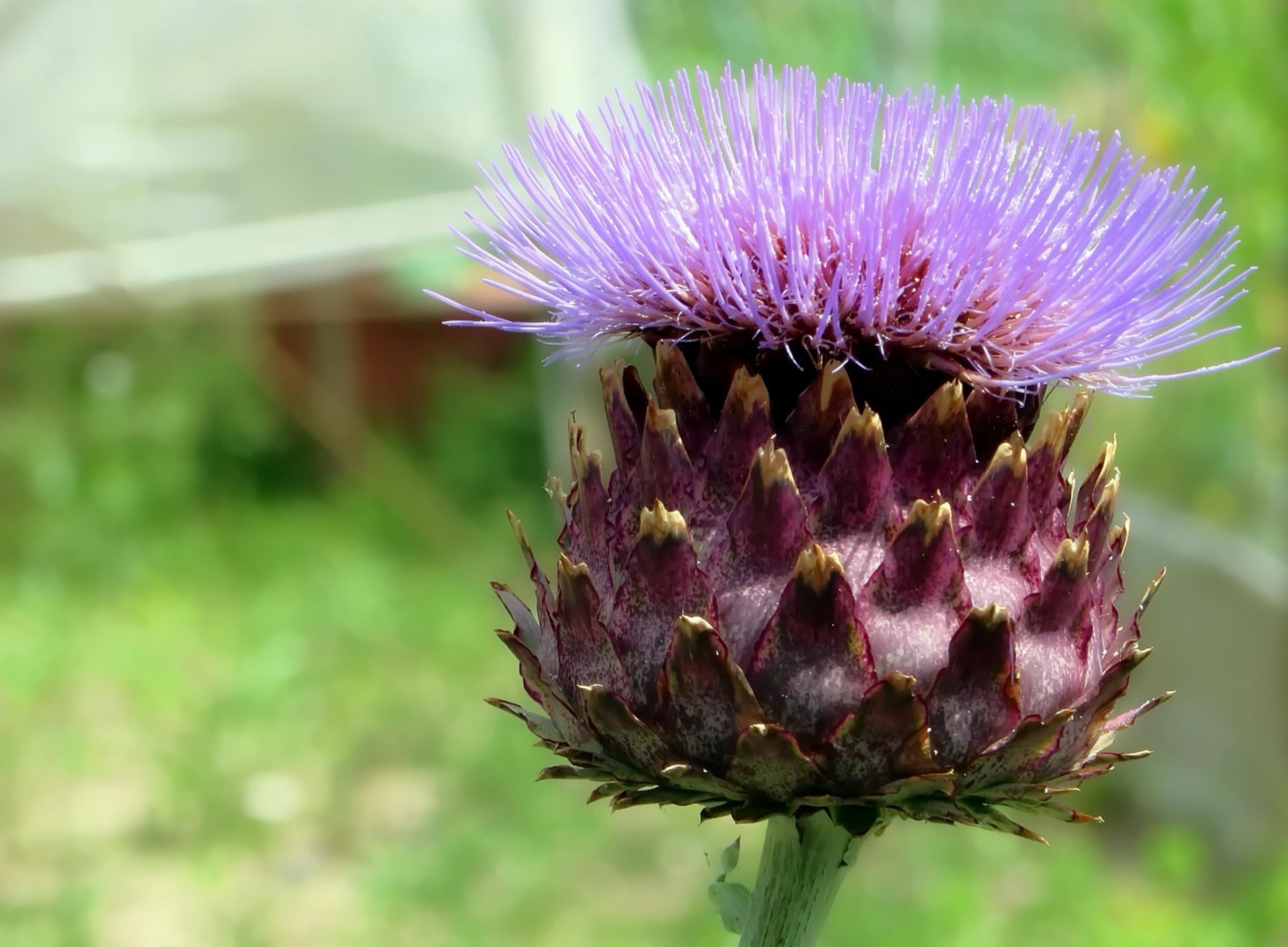
Pictured above: An artichoke in full bloom basking in the sun, displaying full and delicate purple blooms. Picture credit: NoName_13
Whether you are growing artichokes for their unique flavor or their many health benefits, they are a wonderful addition to any garden or project. With their beautiful flowers and delicious buds, they are sure to bring a touch of magnificence and flavor to your permaculture project. And with their ease of growth and adaptability, you will enjoy dozens, maybe hundreds, of artichokes throughout its lifetime.
Propagation & Planting
While growing artichokes might seem daunting at first, the good news is that they're super easy to propagate and plant, even for permaculturists or gardeners who are new to growing edibles. Whether you're looking to start your own artichoke patch or simply want to add a few plants to your existing garden, the instructions below will help you get started.
Propagating through Division:
Propagating artichokes through division is an effective method for maintaining healthy and robust plants, and also is the fastest way to grow a plant to maturity. Division is best done in the early spring or late fall/winter, when the plant is dormant. First, carefully dig up the entire plant and separate the root ball into several sections, making sure each section has a healthy root system. Replant the divided sections in well-drained soil and water them thoroughly. Keep the soil consistently moist until the plants have re-established their root systems and begun to grow. They will take off before you know it.
Starting From Seed:
Propagating artichokes from seeds is also a viable method, though it will take a bit longer. The seeds should be planted in the spring, 1/4th inch deep in well-drained soil and 4-6 inches apart. The seeds look similar to a pine nut in size, shape and color. If starting indoors, seed 4 to 6 weeks before the last expected frost date in your area, germination will take somewhere between 10 to 21 days. After seeding, make sure the soil is kept consistently moist, but not waterlogged. Transplant the seedlings into larger containers or directly into the ground when they have reached a height of 4-6 inches.
Taking Cuttings:
Propagating artichokes from cuttings is another option for gardeners who want to expand their crop mid-season. Cuttings can therefore be taken from healthy, mature artichoke plants in the spring or early summer. Select shoots that are 4-6 inches long and have 2-3 sets of leaves. Dip the cut end of each cutting into a natural rooting hormone (optional) and then plant it into a container filled with well-drained soil. Place the container in a bright, warm location and keep the soil consistently moist until roots have developed and new growth has begun (usually 2-3 weeks). Once the new growth has established, the cuttings can be transplanted into the garden or larger containers.
Planting Artichokes
When planting artichoke starts, it's important to choose a location that receives full sun and has well-drained soil. Artichokes prefer soil that is slightly acidic, with a pH of around 6.5 to 7.0, but will tolerate soils outside of that range. Before planting, amend the soil with compost or other organic matter to improve the soil's fertility and structure. Plant artichokes so that their roots are covered with soil, but the crown of the plant is exposed. These plants will grow to be huge, and fast, so space them 4 to 6 feet apart to allow room for their mature size and to prevent overcrowding.
Growth & Care
Artichokes are a popular and easy-to-grow perennial vegetable in many home gardens. Their growth and care requirements are relatively straightforward, making them a great choice for novice gardeners and those who are looking for a low-maintenance edible plant.
Pictured above: ****A young artichoke plant fruiting in my garden. It has spiky green leaves with thick stalks and 6 different buds that have yet to bloom.
Artichokes need a warm, sunny climate in order to grow well. They require a minimum of 6-8 hours of sunlight per day and prefer well-drained, slightly acidic soil. When it comes to water, artichokes have shallow root systems, so they are not drought-tolerant and need to be kept consistently moist, but not waterlogged. Incorporate these plants into parts of your design that retain consistent moisture but do not become water-logged. In my garden, this is in an infiltration basin on a downhill slope. After the plant has been established, water deeply once per week to encourage deep root growth. With the right care, artichokes can grow up to 6’ feet tall and 4’ wide!
There are several different kinds of bugs that will live and thrive on an artichoke plant if given a chance, including armyworms, aphids, plume moths, leafminers, and weevils. However, it is not incredibly susceptible to be overtaken by these kinds of critters when planted in a diverse, polyculture type of environment. Most sightings and tellings of these kinds of bugs have been reported from large scale, mono-cropped agriculture. Plant artichoke with companion plants such as peas, tarragon, sunflowers, cabbage, asparagus, new melons, mangos, to create a diverse system and invite insectary bugs into the garden.
As your plant matures, encourage further growth by mulching your artichoke plants with a layer of organic material, such as wood chips, leaves, compost, straw, rotted manure, grass clippings, etc. to conserve moisture, suppress weeds, and regulate soil temperature. Artichokes benefit from regular fertilization, especially when grown in soil that is not naturally rich in nutrients. In healthy soil, fertilize once per season, in poor soils you can get away with adding a layer of organic matter as often as once a month. The growing season for artichokes typically lasts from spring to fall. After the season is through, chop-and-drop the entire plant back to feed the ground and encourage new growth the following year. If all goes well, you should have an artichoke plant that will live up to 5 years! Semi-regular monitoring, proper watering and fertilization can help ensure a successful and bountiful harvest.
Harvesting
Pictured above: An artichoke plant growing in my garden. There are two artichokes pictured, one large and one small, each with thick, large stalks and large, green, thistle-like leaves. These artichokes are at perfect maturity.
Harvesting artichokes is an exciting time in my household as they are a house favorite. They grow in clusters on tall stalks, and each stalk will typically produce several artichokes. Harvesting usually occurs in late summer, when the buds are still tight and the scales are firm. One way to determine if the artichoke is ready to be harvested is to gently squeeze the bud. If it's still tight and firm, it's ready to be harvested. If it starts to open up, it's probably past its prime and should be harvested immediately. The picture below is from one of my artichoke harvests. Ideally I should have picked them 1-2 weeks earlier for a more tender flavor, they were still very tasty but I did cut it close. If harvesting late, be sure to steam instead of roast so they do not become tough.
Pictured above: one of the many harvests from one of artichoke plants in late summer. 7 artichokes lay on grass, each of varying size and openness. Although beautiful, several of these were picked too late and ended up being a big tough.
To harvest, use a sharp knife or pruning shears to cut the stalk about two inches below the artichoke. Make sure to cut cleanly and avoid damaging the nearby stalks or leaves. If you're harvesting a large crop, it's a good idea to wear gloves to protect your hands from the prickly thorns on the outer leaves. You can also harvest in the morning when the artichokes are still cool and crisp to prolong freshness and tenderness. In terms of post-harvest preparation, artichokes can be cooked immediately or stored for later use. To store, simply wrap them in a damp cloth and place them in the refrigerator or a cool, dry place.
Processing & Utilizing
The artichoke is a versatile vegetable with a unique and flavorful taste, making it a favorite among many home cooks and chefs across the world. Processing and utilizing artichokes is a fun and delicious way to enjoy their many benefits.
In the Garden:
After harvesting your artichokes, simply chop up the leaves, stem, and other parts of the plant that you have trimmed off, and drop them around the base of the plant. Transfer some pieces to other beds in the garden that need a layer of matter. This organic matter will break down over time, adding valuable nutrients back into the soil and supporting the growth of future plants. Be sure to cut up pieces between 4-6 inches, or use larger stems in a hugelkultur type mound. Add pieces to the compost as well as either a nitrogen or carbon rich material.
Pictured above: A close-up of a postseason artichoke plant with two dry, dead stalks that have flowered and now stand withered and brown in the garden. Picture credit: WikimediaImages
In the Kitchen:
One of the most common ways to process artichokes is to steam them. See below a recipe my family uses regularly for artichokes:
Ingredients:
4 large artichokes
4-6 cloves of garlic
Half lemon, sliced
Salt, to taste
4 tablespoons alternative butter or reg. butter
4ish cups of water
Instructions:
Prep the lemon and garlic: peel garlic skin and keep cloves whole, cut up half of the lemon into slices.
Prep artichokes: rinse the artichokes and trim the stem end to about 1 inch. Cut off the top third of each artichoke and snap off any small, tough leaves near the base.
Place the garlic, lemon slices, and salt in the center of a large saucepan or pot. Stand the artichokes in the pot on top of the lemon and garlic.
Fill the pot with water until it reaches just below the bottom of the artichokes.
Place the pot on the stove and bring the water to a boil.
Cover the pot with a lid and reduce the heat to medium-low.
Simmer the artichokes for 25-30 minutes, or until a leaf can be easily pulled off near the base.
Remove the artichokes from the pot and drain.
Eat plain, serve each artichoke with a small bowl of melted butter for dipping, or sprinkle with lemon juice and salt to taste. Enjoy!
One crucial aspect to keep in mind is that artichoke leaves coated in butter or dairy-free butter can no longer be composted in a backyard compost bin. The oil coating prevents them from breaking down properly. They can be composted if they have been steamed or roasted without oil.
Artichokes can also be grilled or roasted in the oven. Grilling brings out the natural sweetness of the artichoke and adds a smoky flavor. To roast, cut the artichoke in half and drizzle with olive oil and seasoning. Heat oven to 400°F (204°C). Add lemons and garlic (or any other desired herbs that bakewell), and bake in the oven for 20-30 minutes or until tender
Once prepared, they are a functional ingredient in many different recipes and can be preserved by pickling, canning, or freezing. They can be added to soups, stews, and casseroles for added flavor and texture. They are also a great addition to pasta dishes or frittatas. Pickled artichokes are a great addition to salads or sandwiches, and they can also be used as a topping for pizza or even as a garnish for cocktails! To can artichokes, blanch them first and then place them in a jar with vinegar and spices such as pepper and garlic cloves. To freeze, blanch the artichokes and place them in an airtight container. Whether you are steaming, grilling, pickling, canning, or cooking with them, artichokes are sure to bring a unique and flavorful touch to any dish. So, be creative and have fun experimenting!
To Sum it Up
Growing artichokes is an excellent way to grow a lot of nutritious veg that will continue to come back year after year. With the proper care, these prehistoric looking plants can produce an abundance of flavorful and nutritious globes. From the planting process to harvesting, processing, and finally enjoying a delicious meal, every step is an opportunity to connect with the earth and appreciate the beauty and bounty of what is around us. Whether you decide to grow just a few plants for personal use or a larger crop to sell, artichokes will provide a unique addition to your garden and your table.Cynara cardunculus var. Scolymus
(Edible, Wildlife Benefit, Chop and Drop)
From Seed to Plate: The Ultimate Guide to Growing Artichokes
Pictured above: A colorful display of fresh green and purple artichokes lying side by side. Each artichoke has a round, fleshy base with pointy leaves extending from the top, creating a sharp, spiky appearance. Picture credit: Ronile
Where I live, one of the easiest ways to spot a gardener who grows edibles is from the presence of artichokes in their yard. Not only do they stand out with their tall, spiky foliage and large, dramatic flowers, but they have fleshy buds that boast an attractive blend of green and purple hues, making them visually appealing and slightly prehistoric looking. In addition to their ornamental qualities, artichokes are a versatile vegetable that can be enjoyed in a variety of dishes, from antipasto platters to stir-fries, adding a nutty and slightly bitter flavor to any meal. In this guide, we'll dive into everything there is to know about growing artichokes, from propagation and planting to growth and care, harvesting, and processing. Let’s dive in!
From Ancient Roots to Modern Tables
Artichokes (Cynara cardunculus var. Scolymus), with their signature thistle-like appearance, have been a beloved delicacy for centuries, gracing tables and gardens alike with their unique flavor and beauty. The plant is a member of the thistle and sunflower family (Asteraceae), and is known for its edible flower bud, which is harvested before it has a chance to fully bloom. The bud is composed of delicate, tender petals, which when steamed or boiled, reveal a delicious and tender heart that can be enjoyed as a flavorful treat.
Originally from the Mediterranean region, these magnificent plants have a long history dating back to ancient times, where they were treasured for both their delicious taste and numerous medicinal properties. It was popularized in ancient Rome and Greece around 70 A.D., as the earliest recorded reference to artichokes can be found in The Greek Herbal of Dioscorides, a book on the therapeutic benefits of plants, dating somewhere between 40-70 AD. Despite a brief decline in popularity after the fall of the Roman Empire, the artichoke was eventually reincorporated in Florence, Italy in the 1400s and soon became a staple on tables throughout France. In the early 1800s, French immigrants brought the artichoke to the United States, but it was not until Italian immigrants in California began commercially growing and selling them in the early 1900s that the artichoke truly took hold in the US. Today, California leads the nation in artichoke production, growing nearly 100% of all the artichokes sold in the country.
In terms of medicinal benefits, artichokes have been used for centuries to aid in digestion and to support liver function. They are a great source of antioxidants, which help to protect against free radical damage and may help to lower cholesterol levels in the body. They in fact contain the highest amount of antioxidants of any vegetable out there! They are also rich in vitamins, minerals and fiber, making them an incredibly healthy addition to any diet. Another interesting fact is that they are one of the few plants in the world that produce a naturally occurring form of sesquiterpene lactone called cynaropicrin, which is a powerful antioxidant. It is found mainly in the leaves of an artichoke plant and is what gives it the characteristic flavor of bitterness. This compound is believed to play a role in reducing inflammation, which is why artichokes are often recommended for those with digestive and liver issues.
When it comes to growing artichokes, they are fairly low-maintenance and are ideal for gardeners of all skill levels. There are several different varieties of artichokes to grow including: Green Globe, Omaha, Mercury, Siena,Baby Anzio, Chianti, Big Heart, and King, among others. Choose a variety that is adapted to your region. They prefer well-drained soil and a sunny location, but can be grown in a wide range of climates. Additionally, they are drought tolerant and can be grown with minimal water, making them an ideal choice for gardeners in arid regions (hence why I see them so often in my area). From an ecological perspective, they are an excellent pollinator for bees and butterflies. There’s nothing like hearing the late season buzz surrounding the flowers! They also help to improve soil health as they are heavy feeders and produce a large amount of organic matter that can be added back to the soil. All parts of the plant can therefore be chopped and dropped for mulch in the garden after it has finished growing, late in the growing season.
Pictured above: An artichoke in full bloom basking in the sun, displaying full and delicate purple blooms. Picture credit: NoName_13
Whether you are growing artichokes for their unique flavor or their many health benefits, they are a wonderful addition to any garden or project. With their beautiful flowers and delicious buds, they are sure to bring a touch of magnificence and flavor to your permaculture project. And with their ease of growth and adaptability, you will enjoy dozens, maybe hundreds, of artichokes throughout its lifetime.
Propagation & Planting
While growing artichokes might seem daunting at first, the good news is that they're super easy to propagate and plant, even for permaculturists or gardeners who are new to growing edibles. Whether you're looking to start your own artichoke patch or simply want to add a few plants to your existing garden, the instructions below will help you get started.
Propagating through Division:
Propagating artichokes through division is an effective method for maintaining healthy and robust plants, and also is the fastest way to grow a plant to maturity. Division is best done in the early spring or late fall/winter, when the plant is dormant. First, carefully dig up the entire plant and separate the root ball into several sections, making sure each section has a healthy root system. Replant the divided sections in well-drained soil and water them thoroughly. Keep the soil consistently moist until the plants have re-established their root systems and begun to grow. They will take off before you know it.
Starting From Seed:
Propagating artichokes from seeds is also a viable method, though it will take a bit longer. The seeds should be planted in the spring, 1/4th inch deep in well-drained soil and 4-6 inches apart. The seeds look similar to a pine nut in size, shape and color. If starting indoors, seed 4 to 6 weeks before the last expected frost date in your area, germination will take somewhere between 10 to 21 days. After seeding, make sure the soil is kept consistently moist, but not waterlogged. Transplant the seedlings into larger containers or directly into the ground when they have reached a height of 4-6 inches.
Taking Cuttings:
Propagating artichokes from cuttings is another option for gardeners who want to expand their crop mid-season. Cuttings can therefore be taken from healthy, mature artichoke plants in the spring or early summer. Select shoots that are 4-6 inches long and have 2-3 sets of leaves. Dip the cut end of each cutting into a natural rooting hormone (optional) and then plant it into a container filled with well-drained soil. Place the container in a bright, warm location and keep the soil consistently moist until roots have developed and new growth has begun (usually 2-3 weeks). Once the new growth has established, the cuttings can be transplanted into the garden or larger containers.
Planting Artichokes
When planting artichoke starts, it's important to choose a location that receives full sun and has well-drained soil. Artichokes prefer soil that is slightly acidic, with a pH of around 6.5 to 7.0, but will tolerate soils outside of that range. Before planting, amend the soil with compost or other organic matter to improve the soil's fertility and structure. Plant artichokes so that their roots are covered with soil, but the crown of the plant is exposed. These plants will grow to be huge, and fast, so space them 4 to 6 feet apart to allow room for their mature size and to prevent overcrowding.
Growth & Care
Artichokes are a popular and easy-to-grow perennial vegetable in many home gardens. Their growth and care requirements are relatively straightforward, making them a great choice for novice gardeners and those who are looking for a low-maintenance edible plant.
Pictured above: ****A young artichoke plant fruiting in my garden. It has spiky green leaves with thick stalks and 6 different buds that have yet to bloom.
Artichokes need a warm, sunny climate in order to grow well. They require a minimum of 6-8 hours of sunlight per day and prefer well-drained, slightly acidic soil. When it comes to water, artichokes have shallow root systems, so they are not drought-tolerant and need to be kept consistently moist, but not waterlogged. Incorporate these plants into parts of your design that retain consistent moisture but do not become water-logged. In my garden, this is in an infiltration basin on a downhill slope. After the plant has been established, water deeply once per week to encourage deep root growth. With the right care, artichokes can grow up to 6’ feet tall and 4’ wide!
There are several different kinds of bugs that will live and thrive on an artichoke plant if given a chance, including armyworms, aphids, plume moths, leafminers, and weevils. However, it is not incredibly susceptible to be overtaken by these kinds of critters when planted in a diverse, polyculture type of environment. Most sightings and tellings of these kinds of bugs have been reported from large scale, mono-cropped agriculture. Plant artichoke with companion plants such as peas, tarragon, sunflowers, cabbage, asparagus, new melons, mangos, to create a diverse system and invite insectary bugs into the garden.
As your plant matures, encourage further growth by mulching your artichoke plants with a layer of organic material, such as wood chips, leaves, compost, straw, rotted manure, grass clippings, etc. to conserve moisture, suppress weeds, and regulate soil temperature. Artichokes benefit from regular fertilization, especially when grown in soil that is not naturally rich in nutrients. In healthy soil, fertilize once per season, in poor soils you can get away with adding a layer of organic matter as often as once a month. The growing season for artichokes typically lasts from spring to fall. After the season is through, chop-and-drop the entire plant back to feed the ground and encourage new growth the following year. If all goes well, you should have an artichoke plant that will live up to 5 years! Semi-regular monitoring, proper watering and fertilization can help ensure a successful and bountiful harvest.
Harvesting
Pictured above: An artichoke plant growing in my garden. There are two artichokes pictured, one large and one small, each with thick, large stalks and large, green, thistle-like leaves. These artichokes are at perfect maturity.
Harvesting artichokes is an exciting time in my household as they are a house favorite. They grow in clusters on tall stalks, and each stalk will typically produce several artichokes. Harvesting usually occurs in late summer, when the buds are still tight and the scales are firm. One way to determine if the artichoke is ready to be harvested is to gently squeeze the bud. If it's still tight and firm, it's ready to be harvested. If it starts to open up, it's probably past its prime and should be harvested immediately. The picture below is from one of my artichoke harvests. Ideally I should have picked them 1-2 weeks earlier for a more tender flavor, they were still very tasty but I did cut it close. If harvesting late, be sure to steam instead of roast so they do not become tough.
Pictured above: one of the many harvests from one of artichoke plants in late summer. 7 artichokes lay on grass, each of varying size and openness. Although beautiful, several of these were picked too late and ended up being a big tough.
To harvest, use a sharp knife or pruning shears to cut the stalk about two inches below the artichoke. Make sure to cut cleanly and avoid damaging the nearby stalks or leaves. If you're harvesting a large crop, it's a good idea to wear gloves to protect your hands from the prickly thorns on the outer leaves. You can also harvest in the morning when the artichokes are still cool and crisp to prolong freshness and tenderness. In terms of post-harvest preparation, artichokes can be cooked immediately or stored for later use. To store, simply wrap them in a damp cloth and place them in the refrigerator or a cool, dry place.
Processing & Utilizing
The artichoke is a versatile vegetable with a unique and flavorful taste, making it a favorite among many home cooks and chefs across the world. Processing and utilizing artichokes is a fun and delicious way to enjoy their many benefits.
In the Garden:
After harvesting your artichokes, simply chop up the leaves, stem, and other parts of the plant that you have trimmed off, and drop them around the base of the plant. Transfer some pieces to other beds in the garden that need a layer of matter. This organic matter will break down over time, adding valuable nutrients back into the soil and supporting the growth of future plants. Be sure to cut up pieces between 4-6 inches, or use larger stems in a hugelkultur type mound. Add pieces to the compost as well as either a nitrogen or carbon rich material.
Pictured above: A close-up of a postseason artichoke plant with two dry, dead stalks that have flowered and now stand withered and brown in the garden. Picture credit: WikimediaImages
In the Kitchen:
One of the most common ways to process artichokes is to steam them. See below a recipe my family uses regularly for artichokes:
Ingredients:
4 large artichokes
4-6 cloves of garlic
Half lemon, sliced
Salt, to taste
4 tablespoons alternative butter or reg. butter
4ish cups of water
Instructions:
Prep the lemon and garlic: peel garlic skin and keep cloves whole, cut up half of the lemon into slices.
Prep artichokes: rinse the artichokes and trim the stem end to about 1 inch. Cut off the top third of each artichoke and snap off any small, tough leaves near the base.
Place the garlic, lemon slices, and salt in the center of a large saucepan or pot. Stand the artichokes in the pot on top of the lemon and garlic.
Fill the pot with water until it reaches just below the bottom of the artichokes.
Place the pot on the stove and bring the water to a boil.
Cover the pot with a lid and reduce the heat to medium-low.
Simmer the artichokes for 25-30 minutes, or until a leaf can be easily pulled off near the base.
Remove the artichokes from the pot and drain.
Eat plain, serve each artichoke with a small bowl of melted butter for dipping, or sprinkle with lemon juice and salt to taste. Enjoy!
One crucial aspect to keep in mind is that artichoke leaves coated in butter or dairy-free butter can no longer be composted in a backyard compost bin. The oil coating prevents them from breaking down properly. They can be composted if they have been steamed or roasted without oil.
Artichokes can also be grilled or roasted in the oven. Grilling brings out the natural sweetness of the artichoke and adds a smoky flavor. To roast, cut the artichoke in half and drizzle with olive oil and seasoning. Heat oven to 400°F (204°C). Add lemons and garlic (or any other desired herbs that bakewell), and bake in the oven for 20-30 minutes or until tender
Once prepared, they are a functional ingredient in many different recipes and can be preserved by pickling, canning, or freezing. They can be added to soups, stews, and casseroles for added flavor and texture. They are also a great addition to pasta dishes or frittatas. Pickled artichokes are a great addition to salads or sandwiches, and they can also be used as a topping for pizza or even as a garnish for cocktails! To can artichokes, blanch them first and then place them in a jar with vinegar and spices such as pepper and garlic cloves. To freeze, blanch the artichokes and place them in an airtight container. Whether you are steaming, grilling, pickling, canning, or cooking with them, artichokes are sure to bring a unique and flavorful touch to any dish. So, be creative and have fun experimenting!
To Sum it Up
Growing artichokes is an excellent way to grow a lot of nutritious veg that will continue to come back year after year. With the proper care, these prehistoric looking plants can produce an abundance of flavorful and nutritious globes. From the planting process to harvesting, processing, and finally enjoying a delicious meal, every step is an opportunity to connect with the earth and appreciate the beauty and bounty of what is around us. Whether you decide to grow just a few plants for personal use or a larger crop to sell, artichokes will provide a unique addition to your garden and your table.