
The Rainshadow Permaculture Blog
Strawberry Growing Guide
Fragaria ananassa
A Sweet Introduction to Growing Strawberries
Some say that life and death are the only certainties in this world, I would add another: biting into a plump, garden-grown or sun-ripened wild strawberry is truly what makes life worth living! Not to mention the look on a kid’s face after trying a strawberry for the first time. Growing strawberries is a delight, not just because they taste amazing, but because they are easy to grow, have a short growth cycle, and can provide a bountiful harvest season after season. With their delicate, sweet flavor and bright, beautiful appearance, they are sure to bring a smile to your face and a touch of magic to your table. So, let's delve into the world of growing strawberries and discover the joys of this versatile and beloved fruit.
Strawberry Overview
Strawberries are one of the most beloved fruits in the world. These sweet, juicy, and versatile berries are enjoyed by people of all ages, and they have been treasured for thousands of years. From their origins in the wild to their modern-day cultivation, strawberries have a rich and fascinating history that is intertwined with our own.
The strawberry plant is a perennial herb that belongs to the rose family. Its scientific name is Fragaria ananassa, and it is native to North America, South America, Europe, and Asia. Strawberries were once wild (and still are), but over time, humans have selectively bred them for larger and sweeter fruits. Today, there are many different varieties of strawberries, each with their own unique flavor, color, and size.
Strawberries have a variety of traditional uses. They are most commonly consumed fresh, either on their own or as part of a dish. They are also used in jams, jellies, preserves, syrups, and other sweet treats. In addition to their culinary uses, strawberries have been used for medicinal purposes for thousands of years. They are rich in vitamins and antioxidants, and they have been used to treat everything from colds to digestive problems.
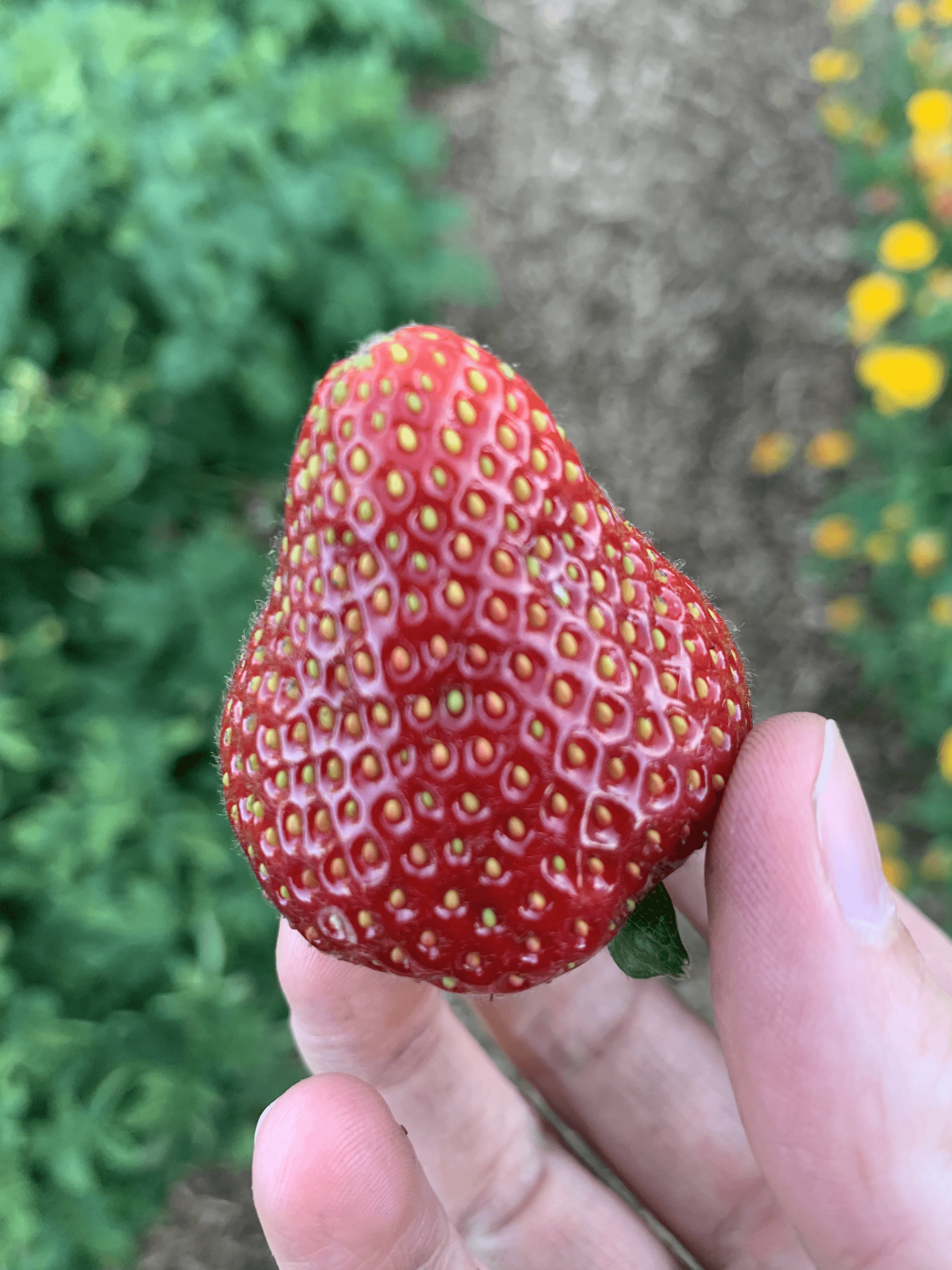
One of the most interesting facts about strawberries is that they are not actually berries in the botanical sense. A true berry is a fruit that has seeds embedded in the flesh, while strawberries have seeds on the outside. Additionally, strawberries are not grown on trees, but rather on plants that grow close to the ground. Technically, strawberries are classified as “aggregate accessory fruits”, which means that the fleshy part is not produced from the ovaries of the plant, but from the receptacle that holds the ovaries.
Pictured above: A snail making their way up to a wild strawberry plant. The snail has a brown shell and light brown body. There are several small ripe strawberries and one white flower in bloom. Picture credit: suju-foto
Strawberry plants offer numerous ecological benefits. For one, they provide food and habitat for wildlife, including birds, bees, and butterflies. Additionally, they serve as a great soil builder, improving the soil structure and fertility by adding organic matter through the natural decomposition of their leaves. The deep roots of the strawberry plant help to prevent soil erosion, and they also improve soil water retention, reducing the need for irrigation. Furthermore, strawberry plants can be grown in a variety of growing systems, including traditional in-ground planting, raised beds, food forests, greenhouses or containers, making them a versatile option for gardeners with limited space. With their numerous benefits, it's no wonder that strawberries have become a popular crop for both home gardeners, permaculturists and commercial growers alike.
There are hundreds of varieties of strawberries available, ranging from classic sweet varieties like "Wild American" and "Fregate," to tangy "Alpine" and "Tristar" berries. No matter where you’re at on your growing journey, growing strawberries is an easy, fun and rewarding experience and I highly recommend it.
Propagation & Planting
Whether you’re planting strawberries for the first time, or you're an experienced grower looking to expand your garden, strawberries have some nuance when it comes to propagation. There are 3 main ways to propagate:
Through Runners:
Strawberry plants have long, wiry stems that “run” out from the main plant, hence why they are called runners. Propagating with runners is in my opinion the easiest way - simply take the runner and “plug” it into the ground or into a pot with sandy, well-drained soil if relocating the runner. You can also use a clip or hair pin to ensure the runner stays within a specific location in the ground. Water the runner lightly and consistently until it becomes established.
By Seed:
Strawberry seeds are tiny, and most varieties require cold stratification in order to germinate. This means they require a cold period in order to successfully sprout. If working with a seed packet and planting in spring, put the seed packet in the freezer for several days to a few weeks. Then sow the tiny seeds in a seed-starting flat or shallow container filled with very fine seed starting mix. Carefully put the seeds on top of the starting mix and barely cover the seeds with soil. Lightly water or mist, not letting the seeds dry out but ensuring they are not water-logged.
Division:
This requires a bit more complexity as it can be very easy to harm the mother plant during division. Divide only in the early spring, when the weather is still cool and there is a lot of moisture in the air. Ensure the plant has sufficient water the afternoon before you intend to divide. Carefully separate the plant by subdividing each half of the root ball into smaller plants, each with several healthy roots and its own crown of at least half an inch (a little over a centimeter) diameter. Dig a new hole at least 12-18 inches away from the mother plant (or relocate). Make the hole just a little deeper than the root ball so the crown is at least one-quarter inch to one-half inch below the level of the soil. Put the roots into the hole and press soil around them. Loosely cover the crown with soil, leaving stems and foliage exposed. Add a layer of compost and mulch with a material such as straw to retain moisture.
No matter which way you propagate strawberries, it is best to select a sunny location with well-draining soil. All plants should be planted in a shallow hole, with the crown of the plant just above the soil level. Pay attention to the depth of the planting hole and to the amount of soil and compost that is used to backfill it. Strawberries are not particularly fussy when it comes to soil requirements, but they do prefer a slightly acidic soil with a pH between 5.5 and 6.5. If your soil is heavy and clay-like, consider adding organic matter such as compost, sand, or well-rotted manure to improve the structure of the soil.
How to Grow Your Own Juicy and Delicious Strawberries
Growing strawberries is a joy, and with the proper attention, they can provide sweet and juicy berries for seasons on end. One strawberry plant can live up to 6 years, and if you’re consistently replanting your runners, they will last much longer. Sunlight is crucial for growth, and strawberries love full sun, though they can still thrive in partial shade. Maintaining moist soil is key for watering, but be careful not to overdo it as this could lead to root rot. Keep strawberries away from areas that hold water consistently. On the flip side, under-watering can result in small, underdeveloped berries, so there is definitely a balance.
There are two main types of strawberries: June-bearing and ever-bearing. June-bearing strawberries produce a large crop of fruit in June, while ever-bearing strawberries produce a smaller crop of fruit in June, and then produce a smaller crop of fruit every few weeks through the summer and fall. Choose a strawberry type that will work best for your garden, as well as the length of your growing season.
Fertilize strawberries with a rich compost 2-4 times per year depending on your current garden and climate. Fertilization can be done throughout any time of year except several weeks before the last frost, as this is when the plant starts to move to dormancy.
Pictured above: A young strawberry plant in my garden during its dormancy period. The plant has four parts, each with three leaves. The plant is surrounded by a compost, mulch blend.
Strawberries are loved among all, and by that I don’t just mean humans! Birds love strawberries and may eat them before you get to them. To ensure you can keep some of the crop, you can add bird nets around the plants. Be sure to leave a certain percentage for wildlife, this percentage will change depending on your specific kind of permaculture project. In terms of pests, common invaders include aphids, spider mites, and slugs. Attract insectary bugs to work out the population with companion plants such as borage, dill, sage, chives, coriander, thyme, caraway, catnip or catmint.
Lastly, proper pruning is crucial for maximizing yields and preserving the health of the plant. In the first year, let the runners grow and form new plants, but compost any that don't bear fruit. In following years, compost any old or sickly leaves and trim the runners back to 4-6 inches.
Harvesting
Harvesting strawberries is one of the most anticipated events in the garden. When the time comes, you'll be rewarded with plump, juicy berries that are bursting with flavor. The best time to harvest strawberries is in the morning, after the dew has dried, but before the heat of the day sets in. This ensures that the strawberries are at their sweetest and juiciest.
To harvest strawberries, gently twist the berry from the plant, taking care not to pull on the stem, which can damage the plant. It is best to pick the strawberries when they are fully ripe and red, as overripe berries can quickly deteriorate. If you're not sure if a berry is ready, gently press it with your thumb. If it yields slightly, it is ready to be picked.
When harvesting strawberries, it is important to be mindful of the plants and their future production. Avoid over-picking, as this can reduce the plant's ability to produce more berries in future seasons. Additionally, only pick the strawberries that are easily accessible, as reaching into the plant can damage the leaves and fruit. To prolong the life of your strawberries, it is best to store them in the refrigerator as soon as possible. Gently wash the strawberries, removing any leaves or stems, and place them in a single layer in a shallow container. Cover the container with a damp cloth to prevent the strawberries from drying out, and store in the refrigerator for up to five days.
Harvesting strawberries is a time-honored tradition that brings the joy of the garden to your table. Whether you're growing strawberries in your backyard or in a container on your patio, the harvesting process is an opportunity to savor the sweet rewards of your labors.
Processing & Utilizing
Strawberries are not only a delightful addition to your garden, but also a versatile fruit that can be used in many different ways. One of the most common uses for strawberries is fresh eating, either on their own or in a variety of dishes, such as smoothies, salads, and baked goods. When harvesting strawberries, it is important to pick them when they are fully ripe, as they will not continue to ripen once they have been picked.
If you have a bumper crop of strawberries, you may want to preserve them for later use. There are several ways to do this, including freezing, drying, and canning. To freeze strawberries, simply wash and hull them, then place them in a single layer on a baking sheet and freeze until solid. Once frozen, you can transfer them to a freezer-safe bag or container. Drying strawberries is another option, and can be done either in a dehydrator or in a low-heat oven. When drying strawberries, it is important to check them frequently to ensure that they are not over-drying, as this can cause them to become hard and brittle.
Canning is another option for preserving strawberries, and there are many different recipes for making jam, jelly, and syrup. When canning strawberries, it is important to follow the instructions carefully, as improper canning techniques can result in spoilage and foodborne illness. In addition to jam, jelly, and syrup, strawberries can also be used in a variety of baked goods, such as cakes, pies, and muffins!
Finally, aside from their culinary uses, strawberries also have a number of medicinal benefits. They are rich in antioxidants, which help to protect the body from damage caused by free radicals. They also contain high levels of vitamin C, which is important for maintaining a healthy immune system. Strawberries are also a good source of fiber, which can help to promote digestive health. There really is nothing wrong with a good ole’ strawberry!
Final Thoughts
Bringing strawberries to your table is a journey that is filled with both joy and a little work, but the end result is more than worth it. Growing your own strawberries allows you to savor the true taste of the berry, picked fresh from the vine and bursting with flavor. With the right care, your strawberry plants can provide you with healthy, sweet, juicy berries for a long, long time. Whether you choose to enjoy them fresh from the garden, preserve them for later, or use them in a variety of recipes, strawberries are a delightful addition to your garden and your life!