
The Rainshadow Permaculture Blog
Fermenting your winter harvest: a guide to making sauerkraut, kvass and more
Getting Started with Winter Fermentation
Have you been curious about fermentation but are unsure where to begin? Whether it’s your first year growing veggies through the cold season, or you want to try fermentation because you’ve heard about it’s numerous health benefits, then you’re in the right place. Sauerkraut, commonly made from cabbage, and Kvass, often made with beets or leftover bread, are some of the most simple, yet easy and rewarding recipes. Once you acquire the right tools and become familiar with the rhythm of the recipes, each can be completed in 20 minutes or less.
About Fermentation:
Before refrigerators, preservatives, and modern canning techniques, fermentation was a key method that many used (and still use) to keep their food from going bad during the cooler months. Fermentation has been practiced all around the world, from kimchi in South Korea to sauerkraut in Germany, kombucha in China) and [cheese in France](https://www.purefrance.com/en/blog/french-cheeses-history-production-regions#:~:text=The history of cheese&text=In France%2C the production was,Maroilles and Tête de Moines.), as well as corn in North America, to only name a few. Alongside dehydration, fermentation stands as a cornerstone in the world of food preservation.
Picture alt text: An over the top view of a large metal bowl of cabbage sitting on a counter. The cabbage has been cut up into small to medium sized strips and is about to be worked into kraut.
The basics of fermentation revolve around creating an anaerobic environment where beneficial bacteria thrive, converting sugars into acids, gases, or alcohol. This not only preserves the food but also enhances its nutritional value and flavor. The process of fermentation also plays a significant role in boosting the nutritional profile of food. It increases the availability of vitamins and minerals for our body, and the proliferation of probiotics in fermented foods supports gut health, aiding in digestion and strengthening the immune system. Often, one of the first recommendations for improving health is linked to enhancing gut bacteria, a goal that fermented foods achieve effectively.
A few key things to note before you begin:
Choose Organic Ingredients: When selecting ingredients for fermentation, opt for organic produce. Pesticides and chemicals often sprayed on or near conventional agriculture can interfere with fermentation as they inhibit the growth of beneficial bacteria.
Sanitize Your Fermentation Jars/Vessels: Ensuring your fermentation jars or vessels are thoroughly sanitized is crucial. Any lingering bacteria or contaminants can spoil your ferment and cause mold. Sanitization means cleaning the jars thoroughly with hot, soapy water and then rinsing them. You can also boil your jars in hot water for 10 minutes or run them through the dishwasher.
Salt: The amount of salt added to ferments is what determines the rate of fermentation and the final taste of the product. Often, to be precise, many will measure the size of their produce to determine the ratio of salt to add to their ferment. To do this, you will need a kitchen scale, such as a digital food scale that can measure in grams or ounces. If you don’t have this, don’t fret, as it doesn’t make that much of a difference when you’re first getting started. If you do have a scale, the golden ratio for sauerkraut is 2% of the weight of the cabbage. For beet kvass, use a slightly lower ratio, around 1.5% of the weight of the beets.
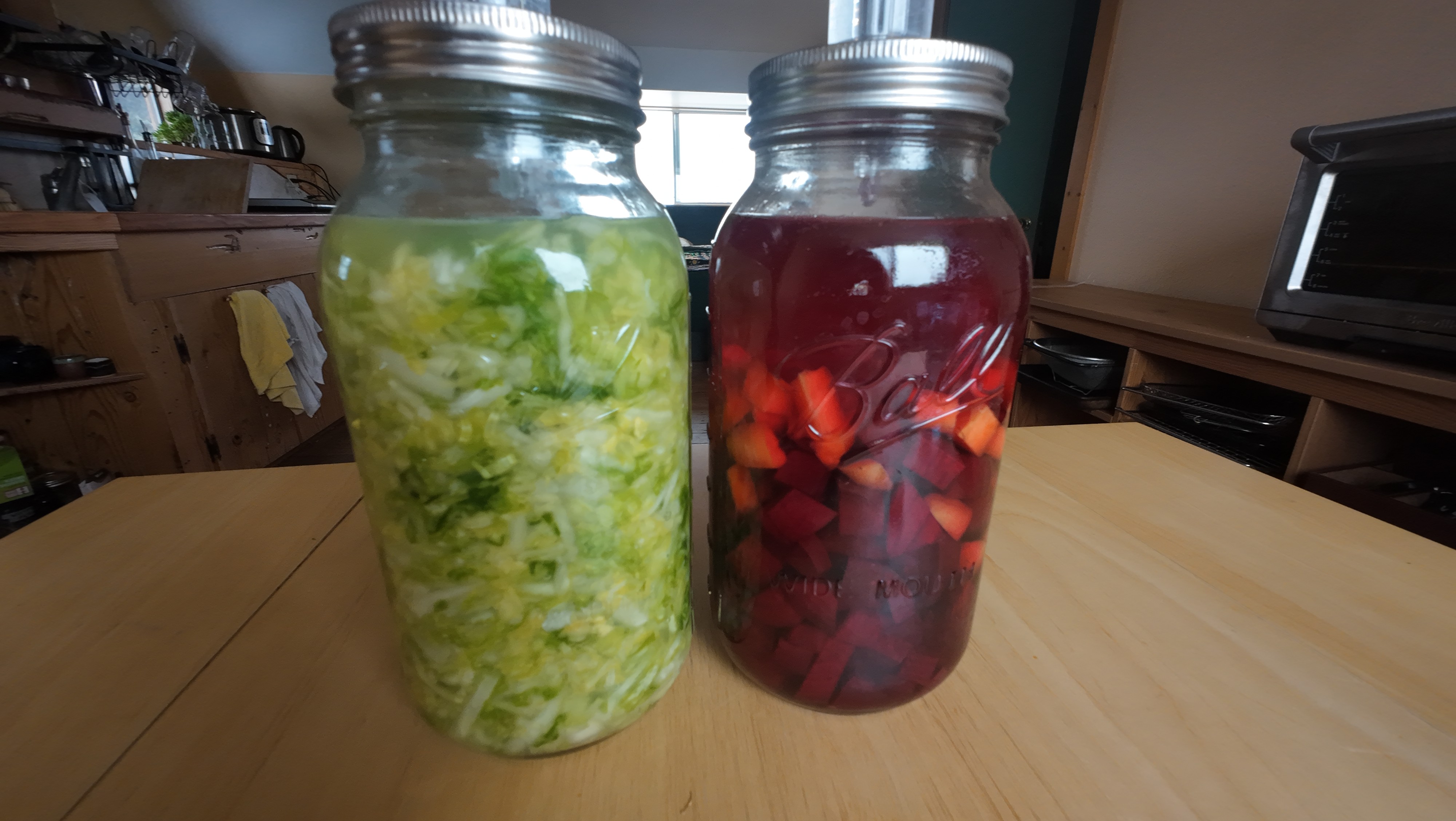
An upclose view of each brine - the sauerkraut on the left and the beet kvass on the right. The liquid should always be above the ferment to prevent growth of bad bacteria and mold.
Tools Needed:
Kitchen knife and cutting board
Measuring spoons
Glass jar or other fermentation vessel
Sauerkraut pounder or wooden spoon
Fermentation weight (optional but recommended)*
Air lock (optional)
Kitchen scale (optional)
In lieu of a glass fermentation weight, you can also use a piece of cabbage, a sanitzed plastic bag filled with water, or a light layer of olive oil to ensure an anaerobic environment.
Recipe: How to Make Sauerkraut
Ingredients:
1-2 Cabbages, size will vary
2 teaspoons of salt for every pound of cabbage, or 2% of the total cabbage weight.
Instructions:
Optional: Weigh your cabbage to determine the ratio of salt. For every pound of cabbage, use about 2% of its weight in salt.
Remove the outer leaves of the cabbage and set them aside. Slice the cabbage as thinly as desired.
In a large bowl, mix the cabbage with the salt. Massage the salt into the cabbage with your hands until it starts to soften and release liquid, usually 5-10 minutes of massaging. If using a sauerkraut pounder, use to continue to work the cabbage down to a smaller size.
Pack the cabbage into a clean fermentation jar. Press down firmly with a pounder or wooden spoon so that the liquid rises above the cabbage.
Place a whole cabbage leaf on top and then add your fermentation weight to keep everything submerged. Optionally you can cut the cabbage leaf in a circle shape to fit the size of the jar exactly. The liquid must always be above the cabbage in order to ensure an anaerobic environment and prevent mold.
Cover the jar with a fermentation lid and airlock or a clean cloth secured with a rubber band.
If using an airlock, no burping is required. However, if you're using a cloth cover, it's important to 'burp' your jar by quickly opening the lid once every day until fermentation is complete. This step is crucial to release built-up gases, preventing the potential buildup of pressure that could lead to jar breakage.
Allow the sauerkraut to ferment at room temperature (65-70 F°, 18-21 C°) for at least 1 week, 2-3 weeks is ideal. It may take a bit longer during winter as indoor temperatures can fluctuate. Check regularly, pressing down the cabbage if needed to keep it submerged. Once it reaches your desired flavor, transfer it to the fridge and enjoy!
Recipe: How to Make Beet Kvass
Ingredients:
3 medium organic beets, diced with skins on
Approx. 6 cups water
1.5 heaping tablespoons fine sea salt, or 1.5% of the total beet weight
Optional add-ons:
Fresh ginger
Fresh carrot or onions
Fresh herbs such as dill or fennel
Pickling spices such as bay leaves, coriander seed, dill seed, black peppercorns, celery seeds, fennel seed, or caraway
Instructions:
Optional: Weigh your beets to determine the ratio of salt. For every pound of beet, use about 1.5% of its weight in salt.
Place the diced beets in the fermentation jar.
Add any optional ingredients like ginger, carrots, onions, or spices as desired.
Dissolve the sea salt in the water and pour over the beets, ensuring they are completely submerged.
Use a fermentation weight to keep the beets below the water level if necessary.
Seal the jar with a fermentation lid and airlock or cover with a cloth and secure with a rubber band.
Allow the kvass to ferment at room temperature (65-70 F°, 18-21 C°) for 5-7 days. It may take a bit longer during winter as indoor temperatures can fluctuate. Check occasionally to ensure the beets remain submerged in the liquid.
Once fermented to you liking, strain the kvass into bottles and refrigerate. The leftover beets can be used in salads or other recipes, or composted.
Other Winter Fermentation Ideas
Diving into sauerkraut and kvass can be just the beginning of your fermentation journey. Winter is a good time to explore fermentation recipes as many of us spend more time inside. If you’re able to get any local produce this time of year (depending on where you live), you can often find root vegetables like parsnips, turnips, and winter squash, along with hearty greens like kale and collards.
Most root vegetables can actually be pickled, including beets, turnips, and even radishes. You can experiment with a range of spices and herbs like dill, mustard seeds, or garlic, to create unique flavor profiles depending on what you like.
Fermented carrots are another great choice for the winter season and also good for beginners. They can be spiced up with ginger or garlic, adding not just flavor but also a boost to your immune system, much needed during cold and flu season.
Kimchi is a fantastic way to add some heat to your winter diet. The combination of cabbage, radish, and a variety of spices can be a warming yet sharp addition to steamed rice, soups, stir-frys, and sandwiches.
The more recipes you ferment the more you are going to want to try. Many times store bought ferments are not as unique tasting as when they’re made at home. So…keep experimenting and don’t give up, and soon you’ll be enjoying the fruits of your labor while also taking care of your body. Enjoy!